
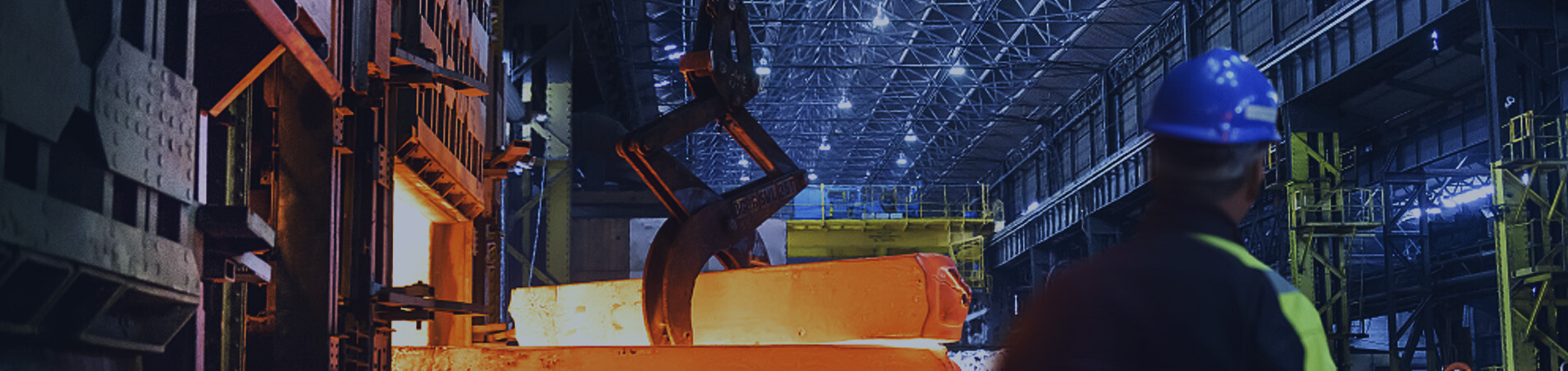
Industrial Heat Treat Furnace | Reliable, Energy-Efficient Solutions for Stable Metallurgical Performance
Industrial Heat Treat Furnace: Engineering Stability, Efficiency, and Long-Term ROI
Introduction: Heat Treatment Is a Precision Business, Not Just High Temperature
In modern metal processing, heat treatment determines the final mechanical properties of steel, alloy, aluminum, and specialty components. Hardness, strength, wear resistance, toughness — all depend on one critical system:
The industrial heat treat furnace.
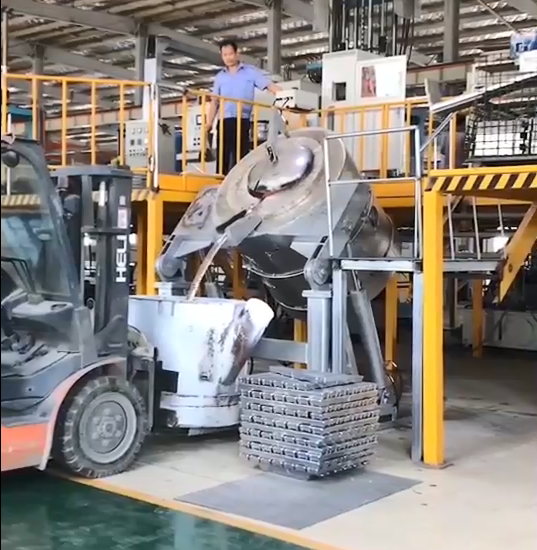
Yet many investment decisions still focus primarily on purchase price and basic parameters.
For experienced factory owners and technical directors, the real question is different:
Can this furnace deliver stable quality, predictable energy cost, and reliable uptime for the next 10–15 years?
An industrial heat treat furnace is not simply a heating chamber. It is the control center of metallurgical performance and production profitability.
Who This Article Is For
Factory Owners & General Managers
You care about:
-
Total Cost of Ownership (TCO)
-
Production consistency and contract reliability
-
Energy efficiency and regulatory compliance
-
Long-term ROI and payback cycle
-
Risk reduction and scalability
You worry about:
-
Investing heavily but failing to reach production targets
-
Downtime that disrupts delivery schedules
-
Service delays, especially overseas
-
Hidden operating costs that extend payback
Technical & Engineering Managers
You focus on:
-
Temperature uniformity and control accuracy
-
Heating efficiency and cycle time
-
Metallurgical consistency
-
Maintenance simplicity
-
Process controllability and automation
You worry about:
-
Parameter exaggeration
-
Inconsistent heat zones
-
Difficult troubleshooting
-
Poor component durability under high load
Outline
-
Why Industrial Heat Treat Furnaces Define Production Quality
-
Reducing Equipment Working Time Through Smarter Thermal Engineering
-
Energy Efficiency as a Strategic Advantage
-
Stability and Metallurgical Consistency Under Continuous Operation
-
Factory Capability and Engineering Experience
-
Export Strength and Overseas Support System
-
After-Sales Service and Lifecycle Partnership
-
ROI, Payback, and Long-Term Value
1. Why Industrial Heat Treat Furnaces Define Production Quality
Heat treatment directly affects:
-
Mechanical properties
-
Dimensional stability
-
Microstructure uniformity
-
Customer acceptance
A poorly designed furnace can cause:
-
Temperature gradients
-
Uneven hardness distribution
-
Warping and distortion
-
Scrap and rework
A professional industrial heat treat furnace manufacturer designs systems with:
-
Precise temperature uniformity
-
Stable heating zones
-
Reliable atmosphere control
-
Accurate cooling coordination
For plant managers, this means:
-
Fewer rejected batches
-
Reduced scrap rate
-
Stronger customer confidence
2. Reducing Equipment Working Time Through Smarter Thermal Engineering
Faster Heating, Controlled Cooling
Non-productive time in heat treatment includes:
-
Long heat-up phases
-
Overcompensation due to unstable control
-
Delays between cycles
-
Rework due to incorrect temperature curves
An advanced industrial heat treat furnace reduces these inefficiencies by:
-
Optimizing chamber insulation
-
Improving heat circulation
-
Implementing intelligent temperature control algorithms
-
Minimizing heat loss during loading and unloading
The result:
-
Shorter cycle time
-
Higher throughput per shift
-
Reduced working hours per batch
Efficiency in heat treatment is about thermal precision, not just higher power input.
3. Energy Efficiency as a Strategic Advantage
Energy cost in heat treatment operations is continuous and cumulative.
An efficient industrial heat treat furnace focuses on:
-
Multi-layer insulation systems
-
Efficient heating elements or burners
-
Reduced standby heat loss
-
Smart energy modulation
Over years of operation, this translates into:
-
Lower cost per processed ton
-
Predictable monthly energy expenditure
-
Better compliance with environmental standards
Energy savings compound over time, directly improving ROI.
4. Stability and Metallurgical Consistency Under Continuous Operation
Laboratory Performance vs. Industrial Reality
Many furnaces perform well during testing but struggle in continuous heavy-duty use.
A reliable manufacturer designs for:
-
Thermal expansion resistance
-
Structural rigidity under repeated cycles
-
Long-life refractory systems
-
Stable atmosphere control
For technical teams, this reduces:
-
Constant recalibration
-
Unexpected drift in temperature
-
Frequent component replacement
For owners, it ensures:
-
Production predictability
-
Reduced emergency downtime
-
Stronger contract performance
5. Factory Capability and Engineering Experience
Manufacturing Control Equals Performance Control
A true industrial heat treat furnace manufacturer operates its own factory. This ensures:
-
Controlled material sourcing
-
Precise fabrication standards
-
Strict quality inspection
-
Consistent assembly processes
Engineering experience adds another layer of reliability:
-
Understanding real industrial loading conditions
-
Designing for long-term durability
-
Avoiding common structural weaknesses
-
Integrating automation with practical operation
This combination of factory strength + engineering expertise reduces long-term operational risk.
6. Export Strength and Overseas Support System
Global operations require more than shipment.
A professional manufacturer provides:
-
Export-ready design documentation
-
Compliance with international standards
-
Remote diagnostic support
-
Structured spare parts planning
-
Commissioning support abroad
For overseas clients, this means:
-
Reduced service delays
-
Faster troubleshooting
-
Lower downtime risk
-
Greater operational confidence
In international projects, support capability is as important as furnace performance.
7. After-Sales Service and Lifecycle Partnership
Industrial heat treat furnaces operate for years, often decades.
A reliable partner offers:
-
Preventive maintenance guidance
-
Performance optimization suggestions
-
Clear response mechanisms
-
Engineers familiar with your specific configuration
After-sales is not about emergency repair only —
it is about continuous improvement and lifespan extension.
This reduces:
-
Total lifecycle cost
-
Unexpected capital reinvestment
-
Operational stress
8. ROI, Payback, and Long-Term Value
Factory owners often calculate ROI based on initial projections.
But real ROI depends on:
-
Stable throughput
-
Consistent product quality
-
Controlled energy cost
-
Minimal downtime
-
Extended service life
A well-designed industrial heat treat furnace:
-
Shortens payback cycle
-
Reduces financial uncertainty
-
Enhances long-term profitability
-
Supports expansion planning
In industrial investment, predictability equals confidence.
Choosing the Right Industrial Heat Treat Furnace Manufacturer
When evaluating a supplier, ask:
-
Do they own and control their manufacturing facility?
-
Do they provide realistic performance data?
-
Can they support overseas operations?
-
Do they focus on TCO, not just price?
-
Do they provide lifecycle partnership?
A furnace is not a one-time purchase.
It is a long-term production asset.
Final Thoughts: Partnership Over Transaction
In heat treatment, quality is built through thermal control, engineering precision, and operational stability.
We position ourselves as:
-
A factory-based manufacturer
-
An engineering-driven solution provider
-
A globally capable export partner
-
A long-term service-oriented collaborator
If your priority is:
-
Stable production
-
Controlled operating cost
-
Safety and compliance
-
Predictable ROI
-
Long-term scalability
Then the decision is not about choosing the cheapest furnace.
It is about choosing the right industrial heat treat furnace manufacturer —
one that stands beside your production line for years to come.