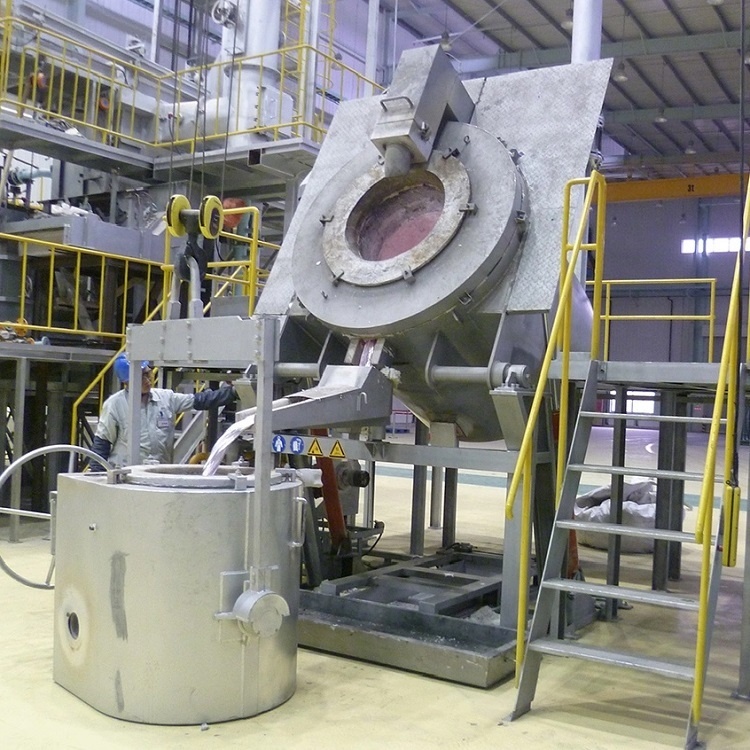
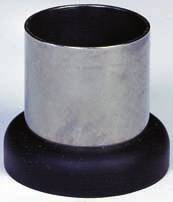
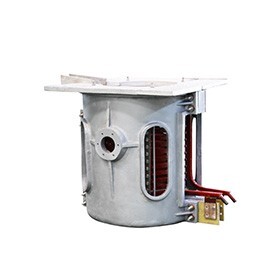
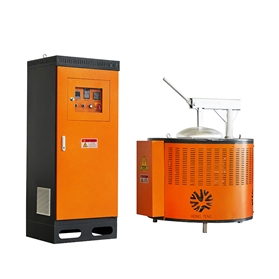
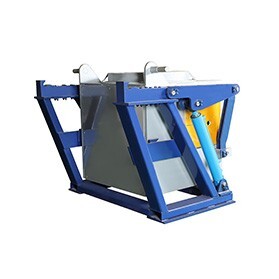
Luoyang HongtengIntermediate frequency induction furnace
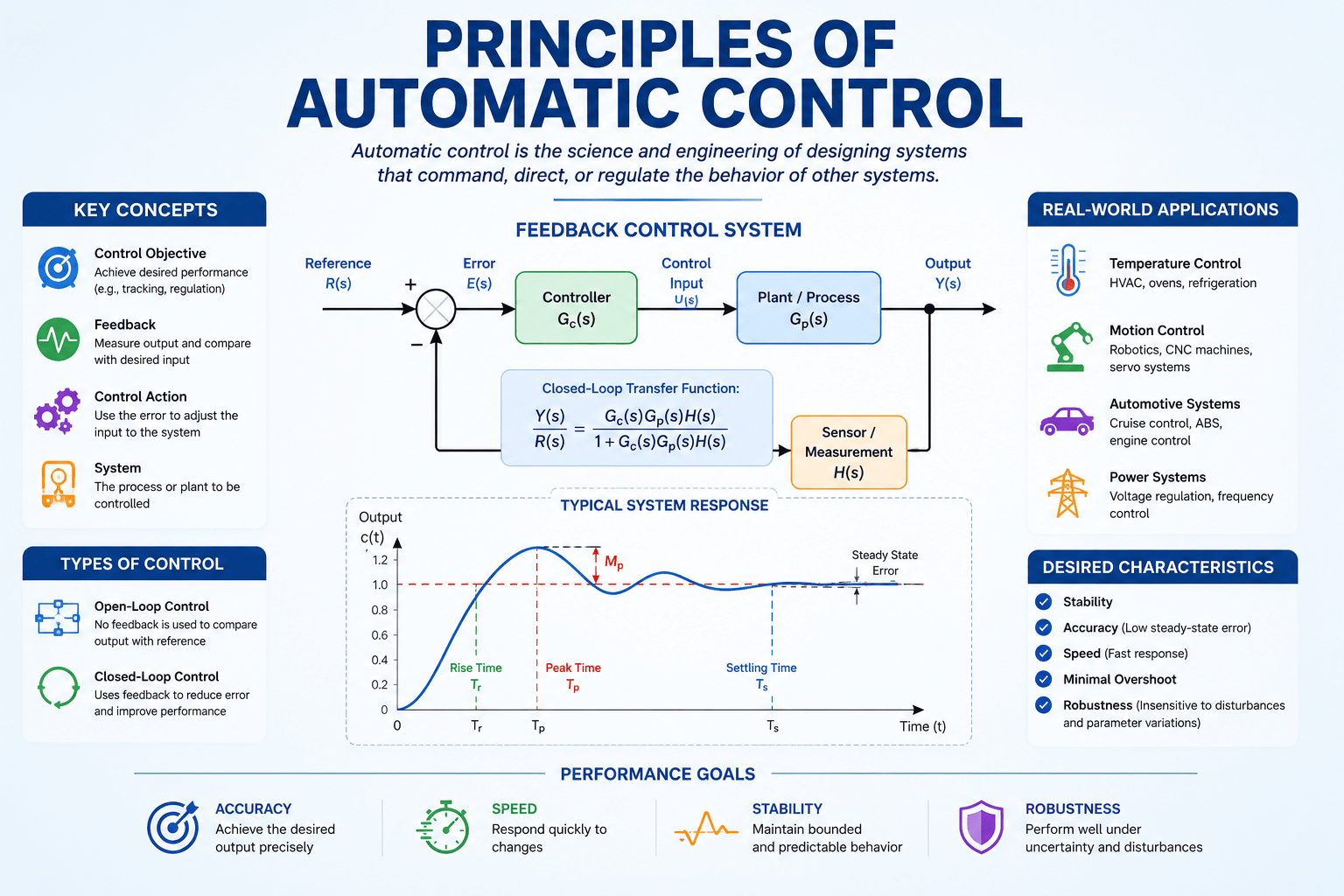
Principles of Automatic Control In industrial furnaces, if high-quality products are to be produced, several physical and chemical variables must be kept essentially constant or controlled according to a preset program. These variables include temperature, pressure, gas composition, and, indirectly, flow rate. The basic principle of automatic control is the same for all of these variables, so it is useful to briefly explain the general principles before discussing each type of control. The variable to be controlled, such as temperature or pressure, is called the controlled variable. A variable that changes by itself and can influence the controlled variable is called an independent variable. In some processes, several independent variables may exist. Automatic control works as follows: a force is derived directly or indirectly from the controlled variable. This force is balanced by gravity, mechanical spring force, gas pressure, electromagnetic force, or another corresponding force. The element that produces the balancing force may take many different forms. When the independent variable changes, the value of the controlled variable also changes. This breaks the balance between the derived force and the opposing force. The small difference between these two forces causes a mechanism to move, attempting to return the controlled variable...
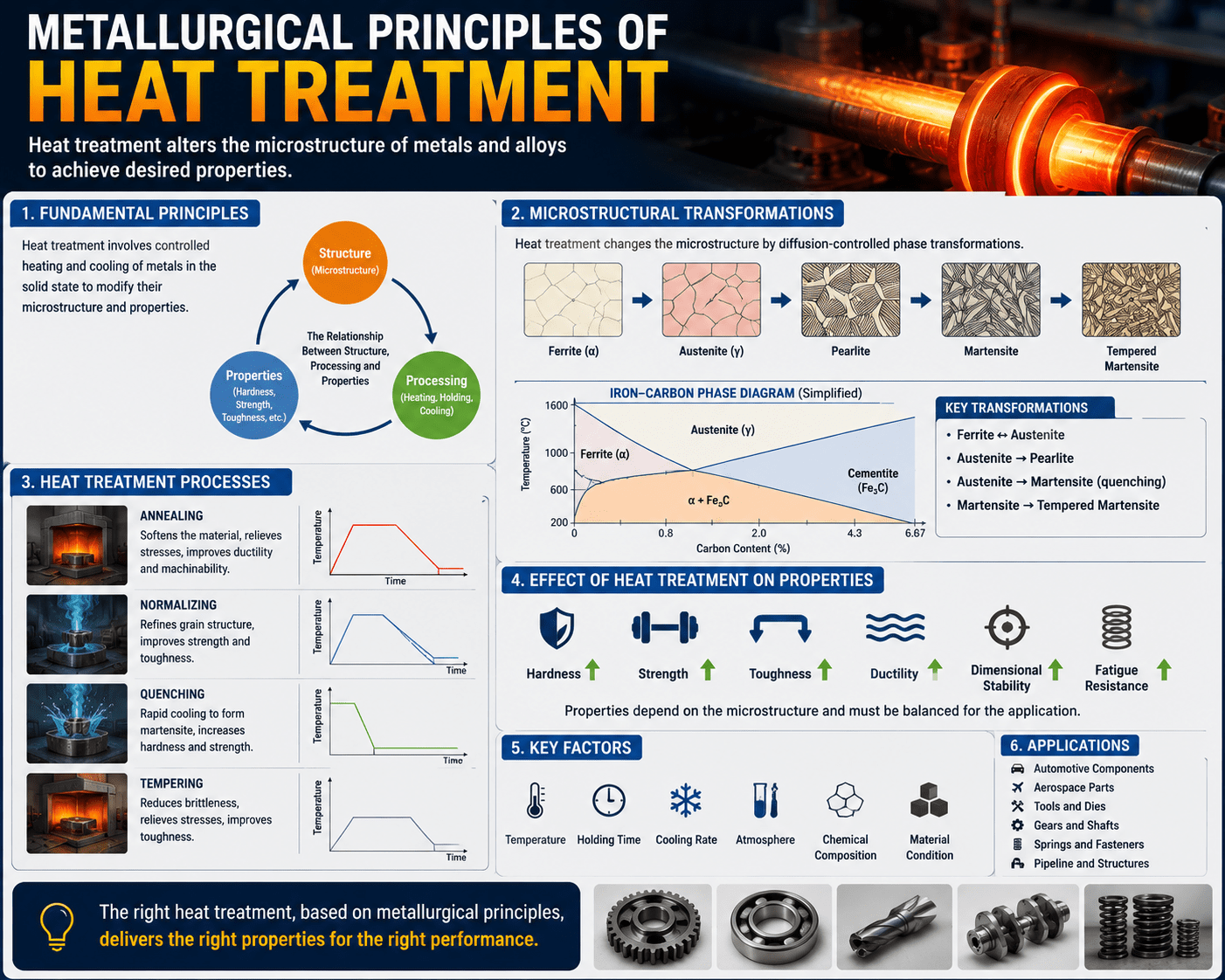
Metallurgical Principles of Heat Treatment The diagram shows a simplified equilibrium diagram for ordinary carbon steel. When the temperature is below 721°C, the normal structure of carbon steel containing 0.3% to 0.83% carbon is ferrite plus pearlite. Pearlite is a mixture composed of lamellar ferrite and cementite. When the temperature rises above 721°C, known as the Ac1 line, cementite begins to dissolve into the solid solution. When the temperature reaches the Ac3 line, the entire material transforms into austenite, which is a solid solution with a crystal structure completely different from the original ferrite. If the surface is rapidly cooled to about 350-200°C, the re-formation of the original ferrite and pearlite can be avoided, and the material passes directly through the martensitic stage. During this rapid cooling process, the crystals interlock with each other in a fine and hard crystal structure, forming very hard steel. This rapid cooling method is called quenching. For high-carbon steel with a carbon content of 0.8% to 1.7%, the amount of martensitic crystals increases, making the steel harder. This type of steel should not be heated all the way to the Acm line. Instead, it should be heated to a lower temperature, such as...
Element Additives and Fast-Dissolving Agents for Aluminum Alloy Production In aluminum alloy production, aluminum-based master alloys are commonly used for batching and composition adjustment. This method can accurately control the chemical composition of finished aluminum alloy products. However, because most master alloys contain relatively low amounts of alloying elements, the required addition amount is often large. To reduce the amount of master alloy added and lower production costs, element additives have been developed and widely used. What Are Element Additives? Element additives are non-sintered powder metallurgy products. They are usually made by mechanically mixing pure metal powder of suitable particle size with sodium-free flux powder, and then pressing the mixture into cake-shaped blocks. At present, commercial element additives are generally composed of three parts: Alloying element powder Aluminum powder Flux powder According to the YS/T 492-2005 standard for aluminum and aluminum alloy composition additives, the commonly specified additives include iron additive, manganese additive, copper additive, chromium additive, and titanium additive. The pure metal content is generally 75% ± 3%. Other grades, specifications, and chemical compositions may be agreed upon by both supplier and buyer in the contract. Common Element Additives and Their Uses Element additives are mainly used to adjust...
Step Heating Suitable for Extrusion Induction heating is widely used to prepare billets for extrusion forming. Its principle is no different from the heating principles described earlier. It can also heat large stock, that is, very long billets. When a hot shear is used to cut a long billet into the required number of billets, these billets can still be maintained at the required temperature. The extrusion forming process requires the billet to have a soft “head” to reduce the starting force of extrusion. Then, heat is generated during extrusion through the die, and mechanical extrusion energy is applied to the billet. Therefore, the ideal method is to apply step heating to the billet, so that the head temperature is 100-120°C higher than the tail temperature. If this heating method is not used, there may be a risk of dimensional difference and uneven metallurgical quality between the two ends of the finished product. It should be noted that uniformly heated billets may also be used by changing the ram speed during the extrusion cycle, but this method is not ideal. The design of induction coils for step heating is not discussed in detail here. Since the temperature rise is proportional...
1. Resistance to Rapid Cooling and Heating During use, a crucible is repeatedly subjected to heating and cooling. As a result, its volume expands and contracts periodically. At this time, compressive stress is generated inside the crucible. Under the repeated action of this stress, cracks may form. If these cracks continue to develop, the crucible will eventually be damaged. To extend the service life of the crucible, crucible products are required to have good resistance to rapid cooling and heating. The factors that affect this property include the proportion of crucible sand materials, the compactness of ramming, and the expansion coefficient of the refractory material. By properly increasing the proportion of medium-sized and coarse sand particles, improving ramming compactness, and selecting refractory materials with a low expansion coefficient, a crucible with better resistance to rapid cooling and heating can be obtained. Expansion Coefficient and Thermal Shock Resistance of Some Crucible Materials Crucible Material Temperature Range, °C Expansion Coefficient Resistance to Rapid Cooling and Heating MgO 20-1700 15.6 × 10⁻⁶ Poor MgO·Al₂O₃ 27-1700 8.5 × 10⁻⁶ Good ZrO₂·SiO₂ 27-1000 4.5 × 10⁻⁶ Relatively good SiO₂ 20-1500 7.5 × 10⁻⁶ Relatively good 2. High-Temperature Strength During the melting process, the crucible itself...
Heating Elements and Non-Metallic Resistance Heating Materials Heating Efficiency in Direct Resistance Heating When heating causes the core temperature of a bar to become too high, power consumption also increases, and the corresponding efficiency decreases. In this case, efficiency refers to the ratio of the “increase in heat content of the bar at the end of heating” to the “heat equivalent of the input electrical energy.” The following comparison data for resistance heating of mild steel shows the influence of size: A bar with a cross section of 60 × 60 mm and a length of 3 m is heated in 117 seconds, with an efficiency of 84%. A bar with a cross section of 100 × 100 mm and a length of 3 m is heated in 582 seconds, with an efficiency of 60%. A typical resistance heating device for bars is usually used to illustrate this type of equipment. If the cross section of the bar varies along its length, direct resistance heating cannot produce a uniform temperature. 2. Heating Elements A heating element maintains the required temperature through the balance between energy absorption and heat loss. The electrical contact point is located outside the furnace. The heating...
Induction Steel Melting Furnace
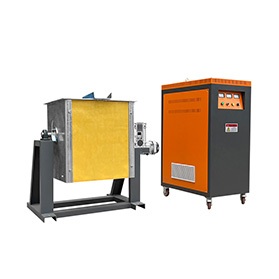
Aluminum Induction Melting Furnace
Stainless Steel Induction Melting Furnace
Medium Frequency Gold Induction Melting Furnace
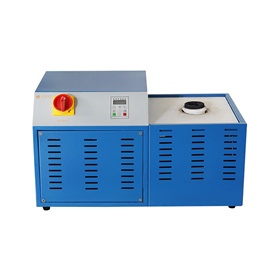
Small Medium Frequency Induction Furnace
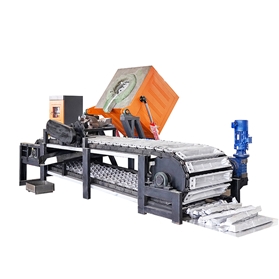
Aluminum/Copper Ingot Continuous Casting Line
Please fill out the form below (required *), send us a short message, and we will contact you as soon as possible.
Send Message
Copyright © 2026 Luoyang Hongteng Electrical Equipment Co., Ltd.