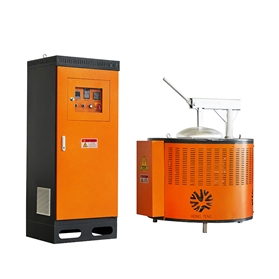
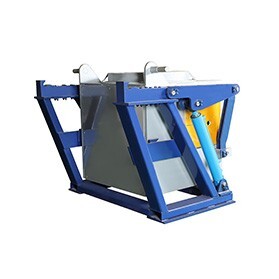
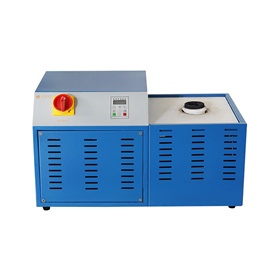
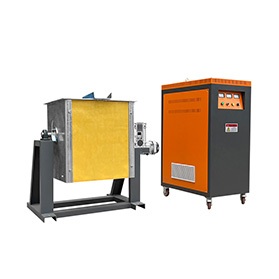
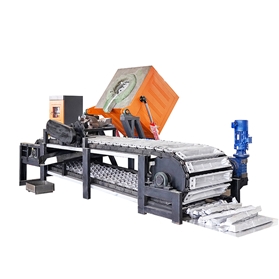
Luoyang HongtengIntermediate frequency induction furnace
Turnkey Foundry Project Solutions: The Strategic Blueprint for Modern Metallurgical Excellence Turnkey foundry project solutions are comprehensive, end-to-end industrial services where a single engineering partner assumes full responsibility for the design, procurement, construction (EPC), and commissioning of a metal casting facility. Unlike fragmented procurement models, a turnkey solution provides a “ready-to-operate” plant, encompassing everything from initial feasibility studies and metallurgical process design to the installation of induction furnaces, automated molding lines, and environmental control systems. For factory owners and technical directors, this model eliminates the “integration risk” associated with managing multiple vendors, ensuring that the final output meets specific capacity, quality, and energy efficiency benchmarks from day one. In the modern industrial landscape, shifting to a turnkey model is driven by the need for Total Cost of Ownership (TCO) optimization. Recent industrial data indicates that foundries built under a turnkey EPC contract realize a 15% to 20% faster time-to-market and a 12% reduction in unforeseen CapEx overruns compared to self-managed projects. By centralizing accountability, turnkey providers allow stakeholders to focus on market expansion while the engineering experts focus on the “melt-to-mold” synchronization. 1. The Strategic Value of EPC in Foundry Engineering When a steel mill or manufacturing group invests in...
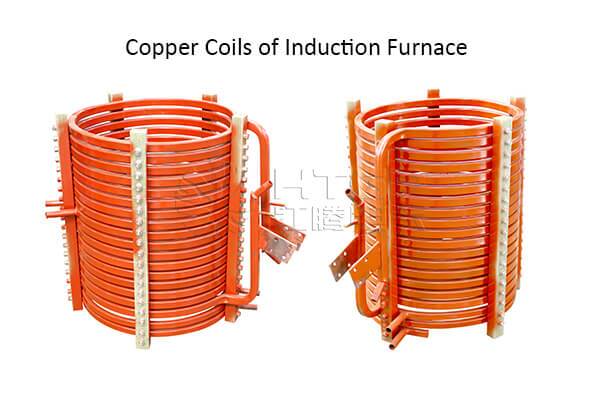
Induction Furnace Price Fundamentals: How Capacity Drives Cost When evaluating induction furnace procurement, capacity isn’t just a spec—it’s the single strongest predictor of total investment. A 25 kg furnace isn’t simply five times more expensive than a 5 kg unit; it reflects nonlinear scaling in power electronics, thermal management, structural integrity, and control architecture. This isn’t theoretical—real-world pricing data from Alibaba’s industrial marketplace shows a 3.8× price jump between 5 kg and 25 kg units, not the linear 5× one might assume. What Is an Induction Furnace? Core Function & Industrial Role An induction furnace uses electromagnetic induction to heat conductive materials—primarily metals—without physical contact. An alternating current passes through a water-cooled copper coil, generating a rapidly changing magnetic field that induces eddy currents inside the metal charge. These currents encounter resistance, converting electrical energy directly into heat within the material itself. Unlike resistance or arc furnaces, this method delivers precise, rapid, and contamination-free melting—critical for aerospace alloys, medical-grade stainless steel, and precious metals like gold and platinum. Why Capacity Is the Primary Price Determinant (Not Just Size) A 120–150 kW solid-state inverter (vs. 15 kW for 5 kg), demanding high-current IGBTs and advanced gate drivers Dual-stage forced-air + glycol...
High-Performance Induction Furnace Industrial Solutions: A Strategic Guide to ROI and Operational Stability An induction furnace industrial system is an advanced electro-thermal melting solution that utilizes electromagnetic induction to heat and melt conductive metals—primarily steel, iron, aluminum, and copper—without direct contact between the heat source and the charge. By passing a high-frequency alternating current through a water-cooled copper coil, the furnace induces powerful eddy currents directly within the metal, achieving thermal efficiency rates often exceeding 90%. For foundry owners and technical directors, these systems represent the transition from high-emission, inefficient legacy melting to precision-controlled, high-yield production environments. In today’s competitive metallurgical landscape, an induction furnace industrial unit is not a mere equipment purchase; it is a strategic asset. The shift toward these systems is driven by the need for metallurgical purity, consistent temperature control, and a drastic reduction in carbon footprints, aligning with global industrial compliance standards. 1. Total Cost of Ownership (TCO): Decoding the Real Price of Melting For a General Manager or Factory Owner, the sticker price of an induction furnace industrial system is a secondary metric. The primary driver of profitability is the Total Cost of Ownership (TCO) over a 10-to-15-year lifecycle. High-tier engineering focuses on minimizing...
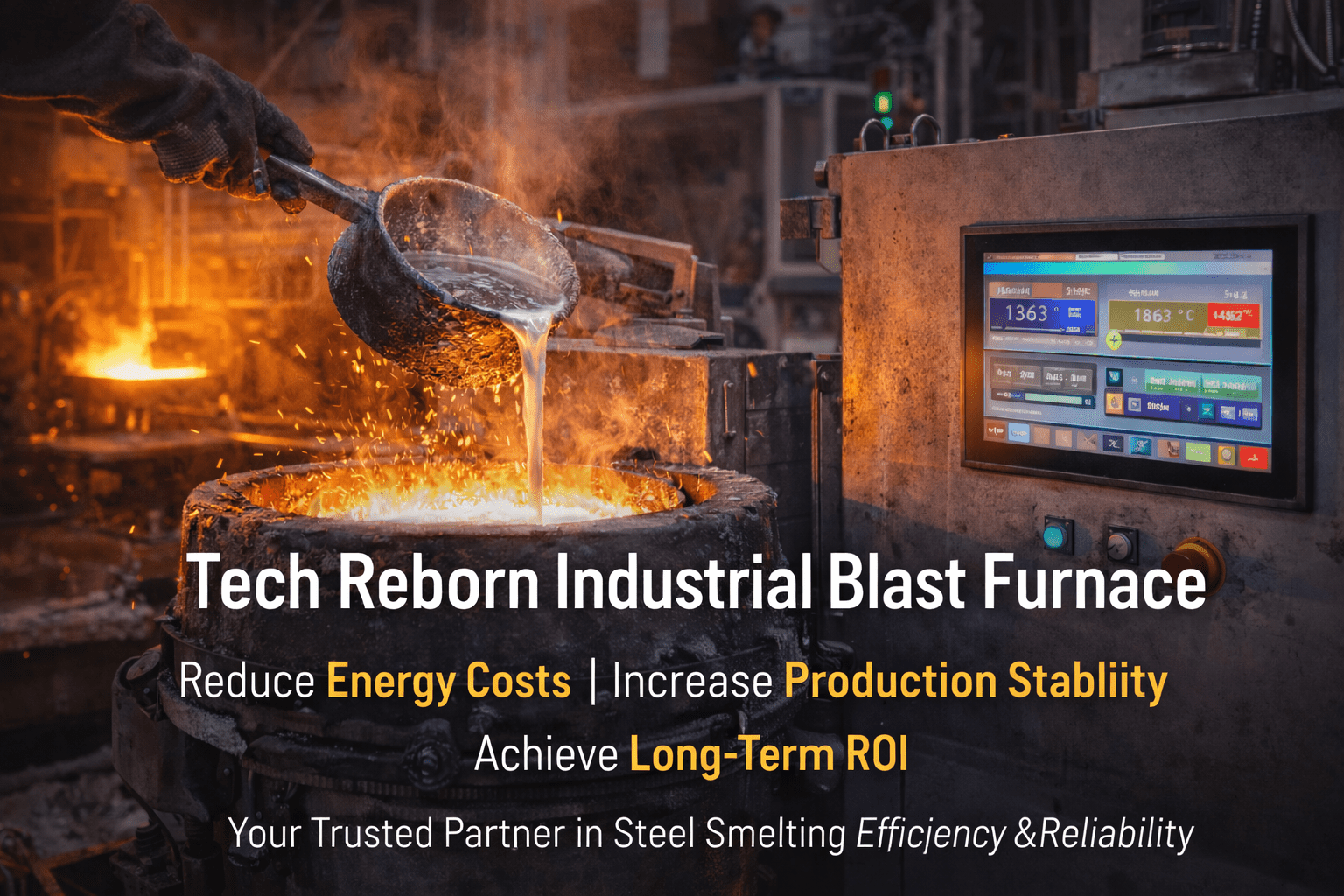
Tech Reborn Industrial Blast Furnace: A Strategic Investment in Efficient, Stable Steel Production Why Industrial Blast Furnace Performance Directly Impacts Your ROI Tech Reborn Industrial Blast Furnace: Beyond Basic Smelting Reducing Energy Consumption Without Sacrificing Output Stability, Compliance & Operational Safety Designed for Technical Teams: Control, Efficiency & Maintenance Simplicity Factory Strength, Engineering Experience & Global Support After-Sales System That Protects Your Production Total Cost of Ownership (TCO) vs. Lowest Purchase Price Long-Term Partnership, Not One-Time Equipment Supply Why Industrial Blast Furnace Performance Directly Impacts Your ROI For factory owners and steel plant general managers, an industrial blast furnace is not simply a piece of equipment — it is the heart of your production line. When a blast furnace underperforms, the consequences are immediate: Output instability Energy waste Increased scrap rate Production delays Rising operational costs More critically, unplanned downtime can cause cascading losses across rolling mills, casting lines, and delivery schedules. One day of furnace shutdown often equals weeks of profit margin erosion. That is why the Tech Reborn Industrial Blast Furnace is positioned not as a low-cost machine — but as a high-return industrial asset engineered for long-term stability. Tech Reborn Industrial Blast Furnace: Beyond Basic Smelting Many...
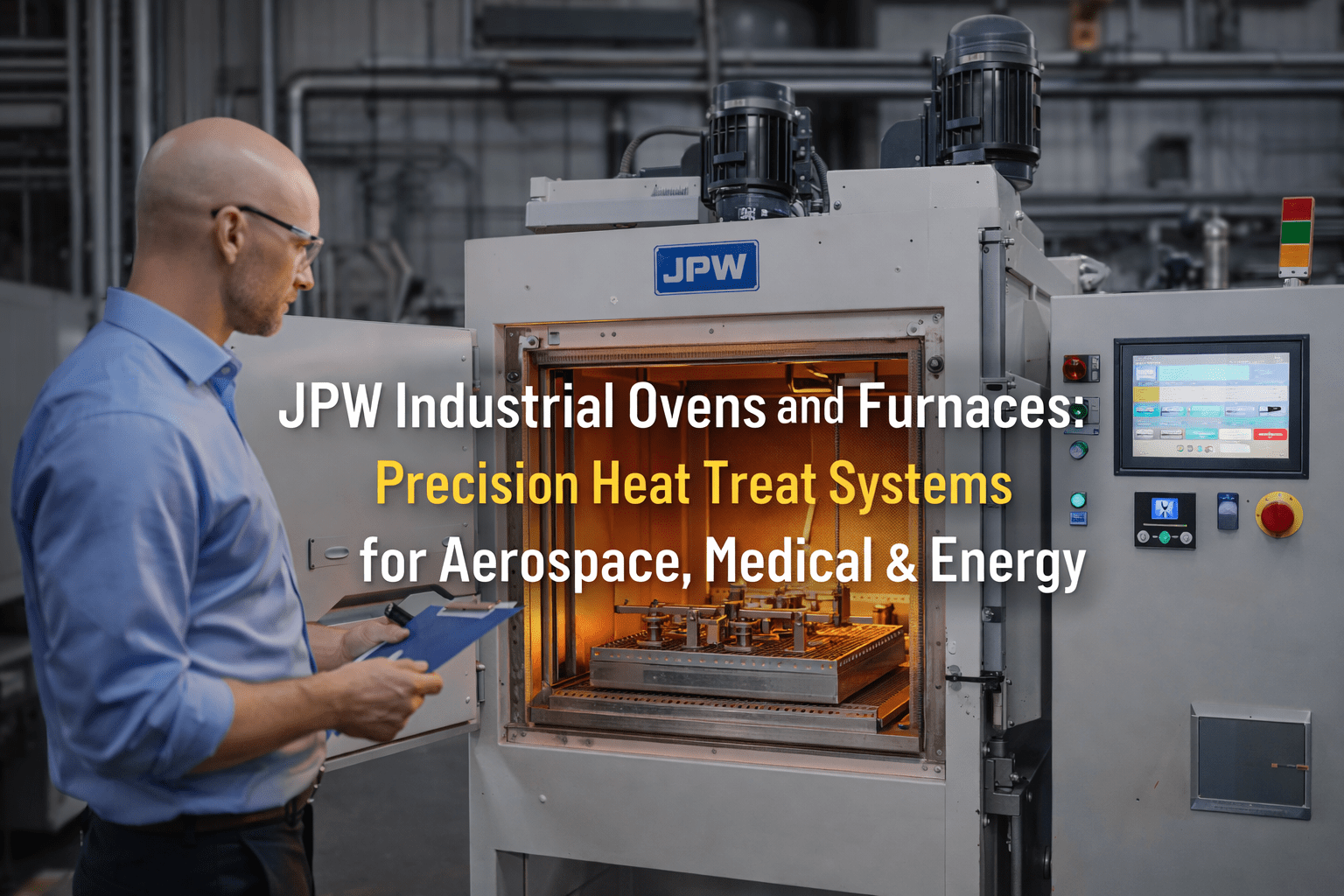
JPW Industrial Ovens and Furnaces: Precision Heat Treat Systems for Aerospace, Medical & Energy Industries When industrial heat treatment determines certification, compliance, and product lifespan, equipment precision is not optional — it is foundational. JPW Industrial Ovens and Furnaces have built a 40+ year legacy in precision heat treat design, delivering batch and continuous furnace systems engineered for aerospace alloys, medical implants, energy components, and high-performance manufacturing environments. This guide explores: What makes JPW industrial heat treat systems different Types of ovens and furnaces available Real-world performance data Compliance with AMS 2750E & ISO 13485 ROI and long-term cost implications Integration guidance for manufacturers What Sets JPW Industrial Ovens and Furnaces Apart? Industrial ovens are common. Precision thermal systems are not. JPW systems are engineered around controlled thermal behavior, not simply heating capacity. Their designs integrate airflow modeling, insulation science, sensor redundancy, and validation protocols from the earliest engineering phase. Unlike commodity industrial ovens, JPW equipment routinely achieves: AMS 2750E Class 1 & Class 2 compliance ±1.5°F to ±3°F uniformity Certified temperature uniformity surveys (TUS) Validation-ready documentation for audit environments In industries where thermal deviation can cause structural failure or compliance rejection, this level of control is essential. Core Product...
Industrial Vacuum Furnace Buyers Avoid These 3 Hidden Contamination Risks What Is an Industrial Vacuum Furnace? Core Principles & Contamination Vulnerabilities Vacuum furnaces don’t just remove air—they eliminate the chemical pathways that degrade material integrity. When aerospace suppliers report 12% yield loss in titanium alloy heat treatment, the root cause is rarely temperature control. It’s contamination from sources no vacuum gauge can detect. Definition: High-Vacuum Thermal Processing Environment An industrial vacuum furnace is a sealed thermal processing chamber capable of achieving pressures below 10⁻⁵ Torr—roughly one-trillionth of atmospheric pressure. Unlike inert-gas furnaces, it removes reactive species (O₂, H₂O, N₂, hydrocarbons) at the molecular level before heating begins. This enables processes like brazing refractory metals, annealing high-purity silicon wafers, and sintering advanced ceramics without oxide formation or carbon pickup. How Vacuum Quality Directly Governs Material Purity Vacuum quality isn’t about “how empty” the chamber is—it’s about partial pressure of specific contaminants. A reading of 5×10⁻⁶ Torr tells you nothing if residual water vapor sits at 10⁻⁷ Torr while hydrocarbon partial pressure reads 10⁻⁴ Torr. That imbalance explains why some furnaces produce clean nickel superalloys while others leave visible carbon smudges on identical loads. The critical metric is contaminant speciation, not total pressure. Why “Hidden” Risks Evade...
Induction Steel Melting Furnace
Aluminum Induction Melting Furnace
Stainless Steel Induction Melting Furnace
Medium Frequency Gold Induction Melting Furnace
Small Medium Frequency Induction Furnace
Aluminum/Copper Ingot Continuous Casting Line
Please fill out the form below (required *), send us a short message, and we will contact you as soon as possible.
Send Message
Copyright © 2026 Luoyang Hongteng Electrical Equipment Co., Ltd.