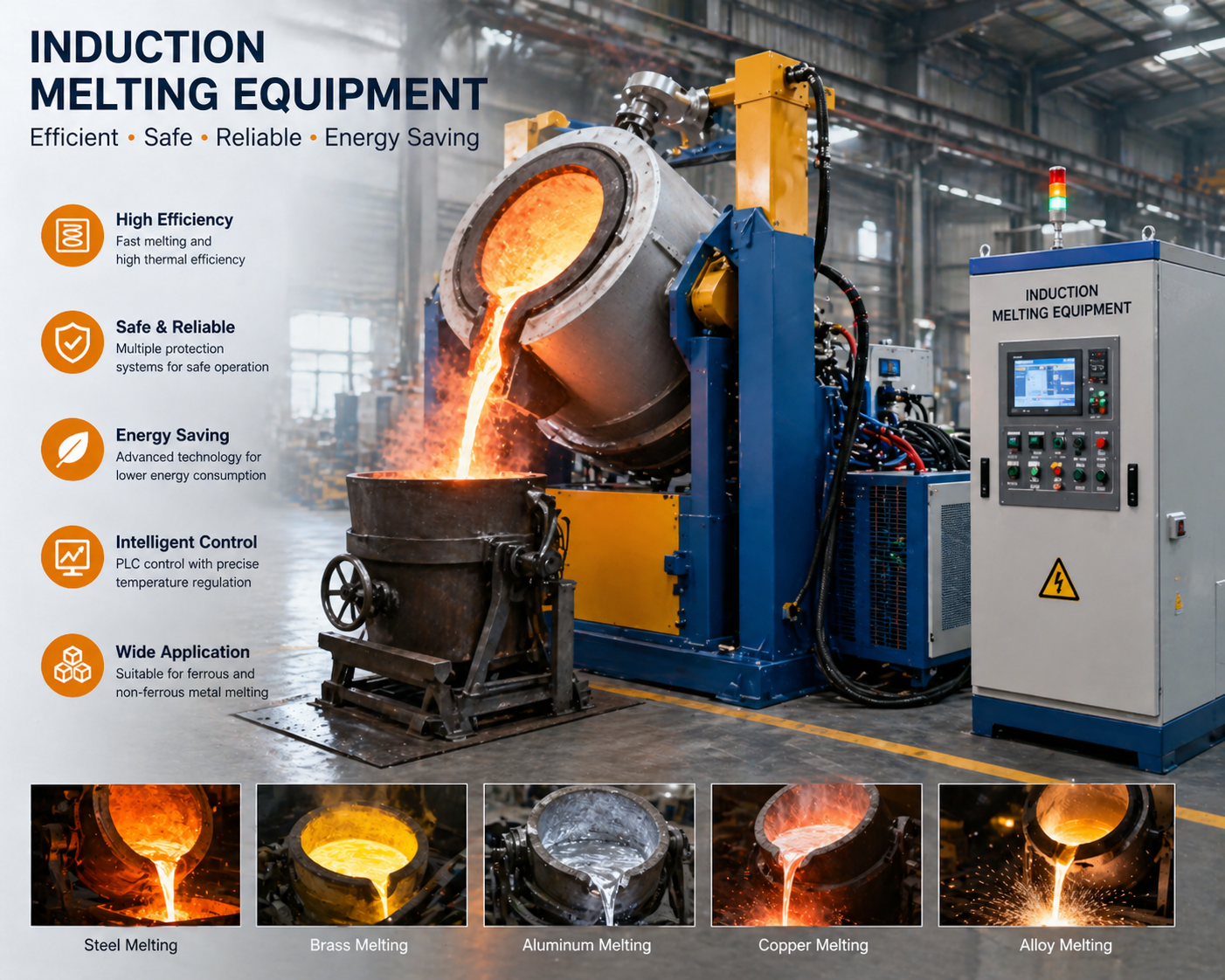
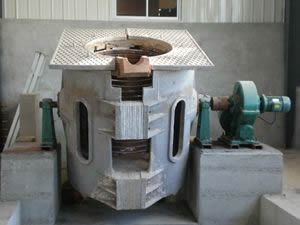
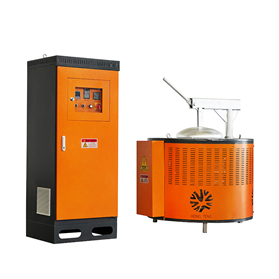
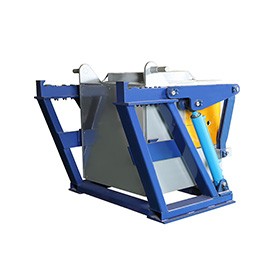
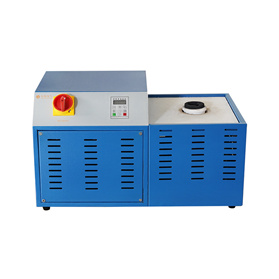
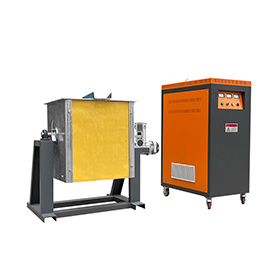
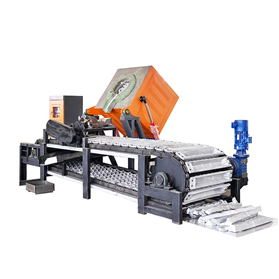
Luoyang HongtengIntermediate frequency induction furnace
Technical Principles of High-Frequency Induction Furnaces: Main Circuit and Frequency Conversion The main circuit of a high-frequency (HF) induction furnace is the core system responsible for generating the intense electromagnetic fields required for precision metal smelting. To achieve the high frequencies necessary for laboratory-grade heating, the system must undergo a complex electrical transformation. 1. Architecture of the Main Circuit The main circuit of a high-frequency induction furnace is comprised of four primary sections: Three-Phase Power Supply: Industrial 50/60 Hz source. Filter Unit: To ensure signal purity and protect the grid. Vacuum Tube Frequency Converter (HF Power Supply): The “brain” of the system. Inductor (Coil/Load): Where the actual heating takes place. The Transformation Goal: The primary function of the vacuum tube converter is to transform standard industrial 3-phase, 50Hz, 380V AC into a single-phase, 200–300kHz, 10,000V high-frequency AC. This high-voltage current is then stepped down to serve as the heating power source for the furnace. 2. The Three Stages of Frequency Conversion The conversion of standard electricity into high-frequency thermal energy involves three distinct metallurgical and electrical steps: Step 1: Power Step-up and Voltage Regulation The three-phase industrial current is filtered and fed into the primary winding of a transformer. Legacy...
Chapter 14: Safety and Environmental Conditions 14.1 Overview and Obligations of the Manufacturer Practical regulations and government decrees have been in implementation for over a century. For instance, the UK Factory Act of 1833 required the guarding of dangerous machinery. At the beginning of this century, to gradually and rationally formulate decrees, the Factory and Workshop Act (1901) was passed, which paved the way for the Electrical Regulations formulated in 1908. The purpose of these decrees was to avoid hazards in the industrial use of electricity. In 1944, these specialized regulations were expanded to cover a broader scope of operations and were incorporated into the Factories Act of 1961. Finally, in 1974, the current Health and Safety at Work Act (HSW) was enacted. These are legal provisions for use in specific settings, and it is necessary for anyone engaged in electro-thermal processes (such as induction heating) to be familiar with these decrees. The General Duties of Manufacturers (Section 6) According to Section 6 of the HSW Act 1974, entitled “General Duties of Manufacturers,” anyone who designs, manufactures, imports, or supplies products for use at work bears certain obligations. When products are used according to specified requirements, it must be ensured...
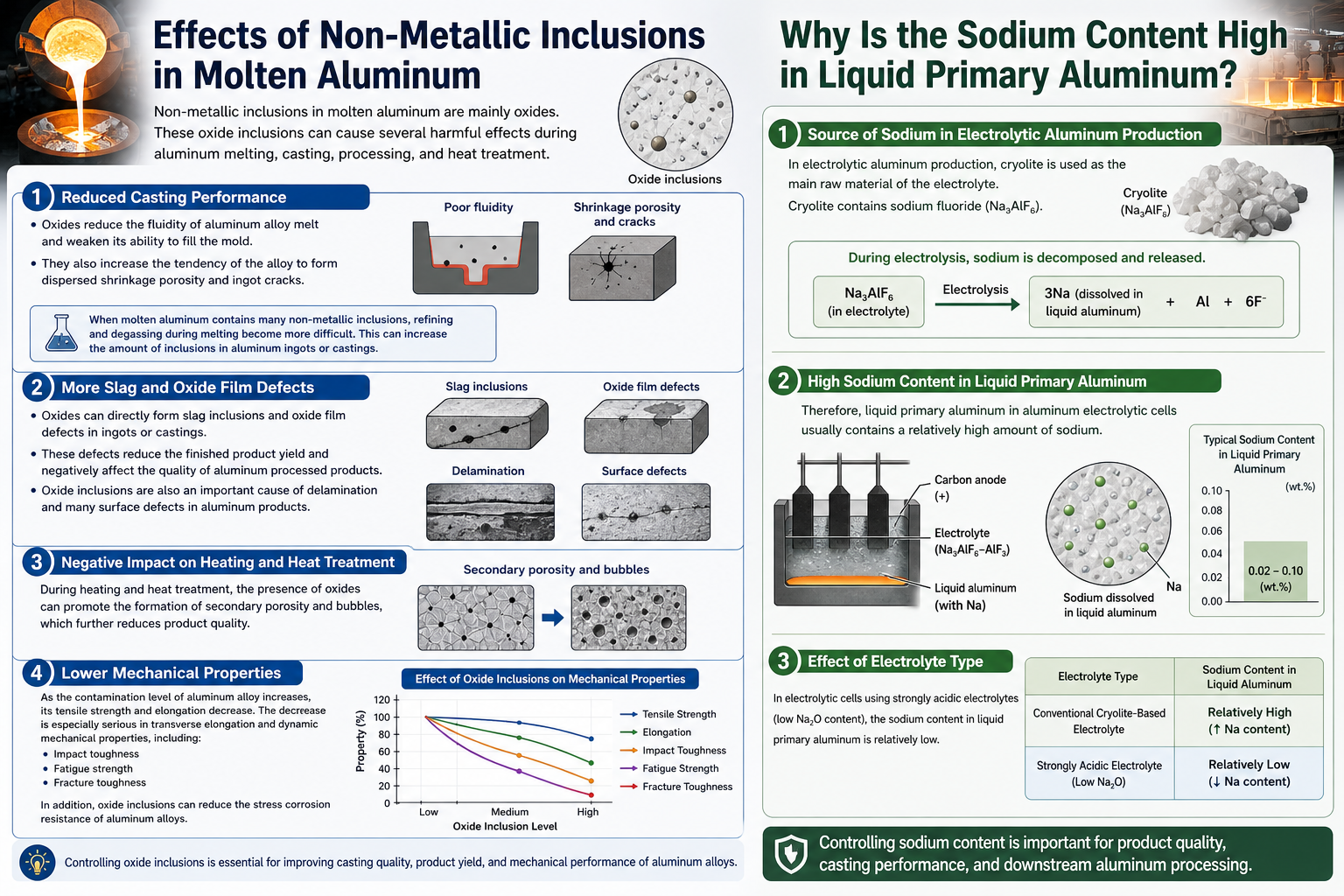
Effects of Non-Metallic Inclusions in Molten Aluminum Non-metallic inclusions in molten aluminum are mainly oxides. These oxide inclusions can cause several harmful effects during aluminum melting, casting, processing, and heat treatment. 1. Reduced Casting Performance Oxides reduce the fluidity of aluminum alloy melt and weaken its ability to fill the mold. They also increase the tendency of the alloy to form dispersed shrinkage porosity and ingot cracks. When molten aluminum contains many non-metallic inclusions, refining and degassing during melting become more difficult. This can increase the amount of inclusions in aluminum ingots or castings. 2. More Slag and Oxide Film Defects Oxides can directly form slag inclusions and oxide film defects in ingots or castings. These defects reduce the finished product yield and negatively affect the quality of aluminum processed products. Oxide inclusions are also an important cause of delamination and many surface defects in aluminum products. 3. Negative Impact on Heating and Heat Treatment During heating and heat treatment, the presence of oxides can promote the formation of secondary porosity and bubbles, which further reduces product quality. 4. Lower Mechanical Properties As the contamination level of aluminum alloy increases, its tensile strength and elongation decrease. The decrease is especially...
The Physical Properties of Solid Aluminum: A Technical Guide Aluminum is a light metal defined by its low density and high versatility. The density of solid pure aluminum is approximately 2.7 g/cm³, roughly one-third that of iron or copper. While density varies slightly with purity, the most significant industrial advantages of aluminum lie in its electrical and thermal performance. 1. Electrical Conductivity and Resistivity Pure aluminum is an exceptional conductor of electricity. For high-purity aluminum (99.990%), the physical specifications at 20°C are as follows: Resistivity ($\rho$): $2.6548 \times 10^{-8} \, \Omega \cdot \text{m}$ Volume Conductivity: 64.94% IACS (International Annealed Copper Standard). Electrical Grade Aluminum: Typically maintains a volume conductivity of at least 62% IACS. Sensitivity to Purity and Temperature Aluminum’s electrical performance is highly sensitive to its environment and composition: Temperature: As temperature rises, resistivity increases and conductivity decreases. Purity: Conductivity drops sharply as impurities increase. In the melting and casting process for electrical-grade aluminum, maintaining high purity is critical to meeting performance standards. 2. Aluminum vs. Copper: The Efficiency Comparison While aluminum’s conductivity is only about 65% of copper’s, its significantly lower density makes it the superior choice for power transmission in terms of weight-to-performance. Property Pure Aluminum Pure...
Aluminum processing 1. Is all the aluminum used in human society primary aluminum? Answer: Not all metallic aluminum widely used in human society is primary aluminum. Current sources consist of primary aluminum production and recycled aluminum production. Recycled aluminum is produced by smelting recovered waste aluminum products. However, primary aluminum production still accounts for the major portion of total aluminum output. With industrial development and the increase in aluminum production and products, the volume of recycled aluminum production will also grow. In industrially developed countries, recycled aluminum production accounts for approximately 1/3 of total aluminum output. 2. What is the role of aluminum in the national economy and daily life? Answer: Since the adoption of the molten salt electrolysis method for producing metallic aluminum, aluminum and its alloys have been extremely widely applied. Due to its excellent chemical properties and superior physical performance, aluminum is extensively used in various industrial fields, including aerospace, power and electrical engineering, automotive and transportation, instrumentation, chemical industry, food industry, construction, and even in people’s daily lives. The output of aluminum ranks first in the non-ferrous metal industry and is second only to steel in the entire metallurgical industry. Since 2001, China has become the...
The Structural Design and Tilting Mechanisms of Medium Frequency Induction Furnaces 1. Overview of the Induction Furnace Body Structure The structural form of the Medium Frequency (MF) induction furnace body is essentially the same as that of the Power Frequency (PF) induction furnace. The furnace body section is comprised of the following core components: Furnace Frame: The primary supporting structure. Furnace Body: Available in two types—Frame Type and Shell Type. Furnace Lid: For thermal retention and safety. Tilting Mechanism: For pouring molten metal. Cooling Water System: To manage the thermal load on the inductor. Power Supply System: The electrical input interface. Industrial examples include the 150kg MF induction furnace and the 500kg MF induction furnace, both commonly equipped with hydraulic tilting devices for precision pouring. 2. Structural Differences: Medium Frequency (MF) vs. Power Frequency (PF) The primary structural difference between MF and PF induction furnaces lies in the relative position of the crucible to the inductor and the cross-sectional dimensions of the inductor. Relative Position of Liquid Metal and Inductor In a Medium Frequency induction furnace, the liquid metal is usually completely surrounded by the inductor, with the metal level remaining lower than the top of the inductor. In contrast,...
Induction Steel Melting Furnace
Aluminum Induction Melting Furnace
Stainless Steel Induction Melting Furnace
Medium Frequency Gold Induction Melting Furnace
Small Medium Frequency Induction Furnace
Aluminum/Copper Ingot Continuous Casting Line
Please fill out the form below (required *), send us a short message, and we will contact you as soon as possible.
Send Message
Copyright © 2026 Luoyang Hongteng Electrical Equipment Co., Ltd.