

High-Frequency Induction Furnace: Main Circuit & Frequency Conversion Principles
Technical Principles of High-Frequency Induction Furnaces: Main Circuit and Frequency Conversion
The main circuit of a high-frequency (HF) induction furnace is the core system responsible for generating the intense electromagnetic fields required for precision metal smelting. To achieve the high frequencies necessary for laboratory-grade heating, the system must undergo a complex electrical transformation.
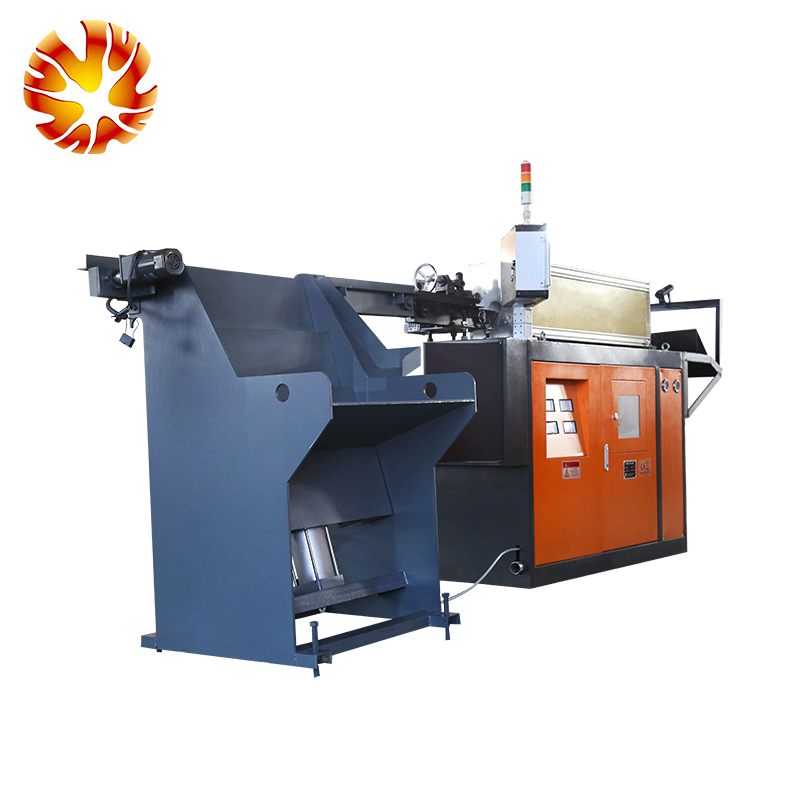
1. Architecture of the Main Circuit
The main circuit of a high-frequency induction furnace is comprised of four primary sections:
-
Three-Phase Power Supply: Industrial 50/60 Hz source.
-
Filter Unit: To ensure signal purity and protect the grid.
-
Vacuum Tube Frequency Converter (HF Power Supply): The “brain” of the system.
-
Inductor (Coil/Load): Where the actual heating takes place.
The Transformation Goal: The primary function of the vacuum tube converter is to transform standard industrial 3-phase, 50Hz, 380V AC into a single-phase, 200–300kHz, 10,000V high-frequency AC. This high-voltage current is then stepped down to serve as the heating power source for the furnace.
2. The Three Stages of Frequency Conversion
The conversion of standard electricity into high-frequency thermal energy involves three distinct metallurgical and electrical steps:
Step 1: Power Step-up and Voltage Regulation
The three-phase industrial current is filtered and fed into the primary winding of a transformer.
-
Legacy Equipment: Utilized traditional high-voltage transformers to reach 10,000V.
-
Modern Equipment: Employs an Induction Regulator. Its structure is similar to a large vertical wound-rotor asynchronous motor. It achieves stepless voltage regulation by changing the relative displacement between the rotor and the stator.
Step 2: Rectification (AC to DC)
Once the voltage is regulated and stepped up, the high-voltage AC must be converted into high-voltage DC.
-
Legacy Equipment: Used thyratrons for full-wave rectification.
-
Modern Equipment: Utilizes High-Voltage Silicon Stacks for full-wave rectification, offering higher reliability and lower maintenance.
Step 3: Oscillation and Frequency Conversion
This is the most critical stage of the process. The high-voltage DC output from the rectifier is supplied to the Oscillating Tube (Vacuum Tube).
-
The tube generates a high-voltage pulsed DC at a frequency of approximately 20 kHz.
-
Through the oscillation circuit, this is converted into high-voltage AC at 200–300 kHz.
-
Finally, a high-frequency transformer steps down the voltage to the safe, high-current levels required for the furnace inductor.
Expert Warning: The Oscillating Tube is the most expensive and delicate component of the system. Operators must exercise extreme caution during startup and shutdown sequences to avoid premature failure due to improper loading or cooling.
FAQ Section
Q: Why is high voltage (10kV) used before oscillation?
A: High voltage is necessary for the efficient operation of vacuum tube oscillators. It allows the tube to handle significant power levels while maintaining the high-speed switching required to reach frequencies up to 300kHz.
Q: What is the benefit of an Induction Regulator over a standard transformer?
A: The induction regulator allows for “stepless” adjustment. This means the operator can fine-tune the power input with extreme precision, which is vital for delicate scientific research and small-scale alloy smelting.
Q: How is the final frequency (200-300kHz) determined?
A: The frequency is determined by the LC circuit (Inductance and Capacitance) within the oscillation stage. By adjusting these values, the furnace can be tuned to the specific resonant frequency of the load.