

Vacuum Induction Melting Furnace
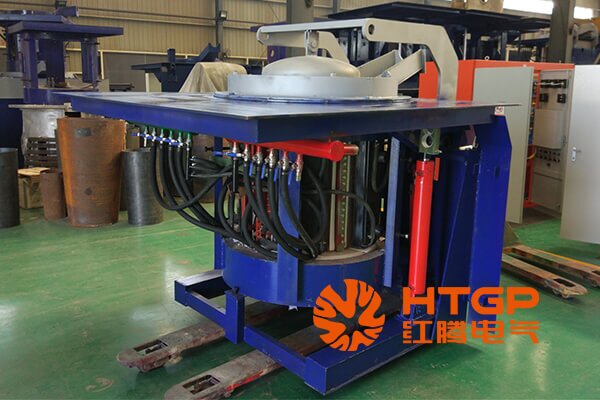
If you manage a melt shop that lives on tight delivery windows and demanding specs, you don’t buy a vacuum induction melting furnace for its brochure numbers—you invest in VIM for predictable output, cleaner chemistry, and fewer nasty surprises. This guide is written from the field: how VIM affects uptime, energy, scrap, safety, and total cost of ownership (TCO). You’ll find practical process notes, maintenance playbooks, procurement tools, and conservative ROI framing, backed by recent, authoritative sources.
Why Choose a Vacuum Induction Melting Furnace — Business Outcomes
For factory owners and technical leaders, the business case for a vacuum induction melting furnace centers on stability and purity. Operating under high vacuum (with optional inert backfill) reduces oxygen, nitrogen, and hydrogen pickup, cuts inclusion risks, and improves consistency—critical for aerospace, medical, and specialty steels.
- More predictable output: Reduced gas pickup supports stable mechanical properties and lower rework/scrap.
- Delivery assurance: Fewer unplanned outages when vacuum integrity and interlocks are verified and maintained.
- Compliance and audits: Documented process control and atmosphere management help you pass customer and regulatory audits.
- Lower lifetime cost: Better first-pass yield and fewer production stops improve total cost of ownership—often more than spec-sheet efficiency alone.
Recent OEM and technical pages describe VIM’s role in high-purity alloys and controlled atmospheres. See BRO’s process overview in their vacuum induction melting furnace technical page (2026) and component notes from HY Furnace’s system overview (2025).
How VIM Works — Process & Key Components
A vacuum induction melting furnace combines electromagnetic heating with high vacuum to melt, refine, and cast reactive or high-spec alloys.
Core subsystems
- Induction coil and medium-frequency power: Water-cooled copper coil driven by IGBT/KGPS supplies; medium-frequency ranges commonly in the 1,500–3,000 Hz band, depending on capacity and design, per manufacturer guidance in BRO’s induction-heated vacuum furnace guide (2026).
- Crucible: Ceramic refractories (alumina, zirconia, magnesia) or graphite-lined variants selected to minimize reactions with melt chemistry. Across International’s foundry overview explains crucible materials and induction fundamentals (2024).
- Vacuum system: Multi-stage pumping (mechanical + roots + diffusion/turbo) achieves high vacuum on the order of 10⁻³–10⁻⁵ (publisher units vary by page). BRO pages note maximum vacuum in the 10⁻³ Pa range in production contexts; SECO/WARWICK’s R&D program references high-vacuum capability in SECO/TECH (2024).
- Chamber/tilt-pour: Robust body with safe tilt mechanisms to cast under vacuum or inert atmosphere.
- Controls & interlocks: PLC/PID for temperature, vacuum, permissives; interlocks for door/lid, water flow, over-temp, and emergency stops.
Typical process sequence
- Charge: Load alloy and returns into the crucible; verify cleanliness.
- Evacuate: Stage pumps from roughing to high vacuum; hold for leak checks.
- Melt: Ramp power under vacuum; avoid sudden changes that could destabilize pressure.
- Refine/degass: Hold at temperature for gas removal; use electromagnetic stirring effects for homogeneity.
- Alloy additions: Add under vacuum/inert where necessary; validate chemistry.
- Pour: Tilt and cast into molds under controlled atmosphere; manage solidification mode per application.
BRO’s technical pages outline these sequences and cautions around power ramping and vacuum integrity in their VIM process overview (2026).
Performance Metrics Owners Should Track
Tie your melt shop KPIs directly to business outcomes:
- Uptime (%): Track planned vs. unplanned downtime. Vacuum integrity checks and interlock testing are leading indicators.
- Energy intensity (kWh/ton): Monitor by alloy and batch size. VIM carries extra load from vacuum systems; efficiency gains come from clean charging, correct ramp profiles, and water system health.
- Melt cycle time (tap-to-tap): Affects throughput and cash tied up in WIP. Record by capacity and recipe.
- Purity and gas content: Oxygen/nitrogen/hydrogen pickup reduction under vacuum aids first-pass yield. Validate via spectroscopy and gas analysis.
- Scrap/rework rate: The most visible cost lever; small percentage improvements compound across the year.
Total Cost of Ownership & ROI — Practical Modeling
Owners don’t need perfect precision—just disciplined, conservative models. Here’s a simple structure you can adapt.
Energy consumption scenario notes
Public pages rarely publish audited kWh-per-ton numbers for VIM; OEMs highlight relative improvements. SECO/WARWICK reports energy and cooling water reductions in their vacuum metallurgy portfolio, as noted in eco-friendly solutions (2024). Treat energy intensity as variable by alloy, capacity, and vacuum level; use site metering to build your baseline.
Maintenance & consumables cost modeling
Common failure modes include crucible breach, insufficient vacuum (leaks/pump issues), and sensor/control drift—preventable with disciplined maintenance. BRO’s guide emphasizes routine checks in induction vacuum furnace operations (2026).
Use sensitivity analysis around energy tariffs and scrap reduction (e.g., every 1% scrap decrease on 2,000 tons at $1,500/ton recovered value is ~$30k/year). Payback depends mainly on utilization, scrap/yield gains, and avoided outages.
Installation, Commissioning & Operator Training — Playbook
A disciplined start-up is the fastest path to predictable output.
Pre-install checklist
- Utilities: Validate electrical capacity, grounding, and harmonic considerations; check water quality (flow, temperature, hardness) for coil and chamber cooling.
- Safety plan: Define interlock test procedures (door/lid, water flow/pressure, over-temp, emergency stop).
- Layout & logistics: Ensure service access to pumps, valves, and coil; plan mold handling and clear pour paths.
Commissioning milestones
- Vacuum integrity: Achieve target vacuum; perform leak-down tests and record baselines.
- Power ramp profiles: Start with conservative ramp rates; watch pressure stability during melt.
- SOP documentation: Lock in recipes, permissives, and sampling schedules; train operators on exceptions and escalation paths.
Reference OSHA’s guidance that interlocks and safety devices must be maintained operable, aligned with general machinery standards—see the OSHA electrical eTool and 1910.269 references (accessed 2026).
Maintenance, Troubleshooting & Reducing Downtime
Downtime prevention is a habit. Codify it.
Daily/weekly/monthly checks
- Daily: Visual leak checks; water flow/temperature; vacuum pump status; sensor readings sanity check.
- Weekly: Chamber cleaning; verify interlocks; review trend logs for anomalies.
- Monthly/quarterly: Pump oil changes per OEM, seal inspections, thermocouple calibration, PLC I/O verification.
24/72-hour triage flow
- 0–24 hours: Stabilize—halt melts, isolate cause (vacuum leak vs. coil fault vs. crucible wear). Run leak-down tests; inspect water system.
- 24–72 hours: Root cause and repair—replace seals/hoses, recalibrate sensors, reline crucible. Update SOP to prevent recurrence.
Common issues and mitigations are outlined in BRO’s operational notes in their induction vacuum furnace guide (2026).
Vendor Evaluation & Procurement Tools
Your RFP should score more than capex.
RFP checklist and scoring criteria
- Technical: Achievable vacuum ranges; coil/power supply specs; crucible compatibility with target alloys; controls and data logging.
- Throughput: Real tap-to-tap times for your capacities; casting modes under vacuum/inert.
- Energy & water: Expected kWh/ton and cooling requirements; metering options.
- Service footprint: Local/overseas service teams, spare-parts stocking, response SLAs.
- Compliance: Standards declarations (NFPA 86/79, OSHA-aligned interlocks), documentation quality.
Service contract & SLA notes for international buyers
- Define response times (remote within hours; on-site within days), spare-parts lists with lead times, and preventive visit cadence.
- Require interlock testing procedures, vacuum integrity audits, and operator training refreshers as part of the contract.
Safety, Compliance & Best Practices
Safety is an engineered feature, not an afterthought.
Vacuum integrity and interlocks
- Verify door/lid interlocks, permissives that prevent power until vacuum and water-flow thresholds are met, and over-temp/emergency stop chains. OSHA emphasizes keeping interlocks operable in its electrical eTool (accessed 2026).
Training, SOPs, and audit cadence
- Train operators on vacuum checks, alloy additions, and emergency tilt/pour.
- Audit quarterly: simulate low-flow and door-open conditions; document results and corrective actions.
Real-World Examples (Anonymized)
- Aerospace components maker (50 kg batch class): Commissioned VIM with disciplined vacuum integrity checks and operator training. Scrap fell ~2–3%, energy per ton stabilized via improved ramp profiles, and unplanned outages dropped after seal/valve preventive maintenance. Payback achieved in ~24–36 months at moderate utilization.
- Specialty steel producer (100 kg class): Switched from atmospheric induction to VIM for a reactive alloy family. First-pass yield improved, with fewer gas-related rejects; overall uptime rose after a structured interlock test plan and water-quality program.
OEM news corroborates process efficiency and control improvements in recent installations. SECO/WARWICK reports faster cycles, lower energy/cooling water use, and recipe control in their aviation-focused deliveries, per news releases (2024–2025) and VIM furnace in China.
Appendix: Glossary and Resources
- VIM: Vacuum induction melting—induction heating under vacuum for high-purity alloys.
- Degassing: Holding molten metal under vacuum to remove dissolved gases.
- Permissives/interlocks: Control logic and hardware that prevents unsafe operation.
Further reading and component/process references:
- BRO Furnaces’ VIM process overview (2026)
- HY Furnace VIM components overview (2025)
- Across International crucible materials and induction furnace fundamentals (2024)
- SECO/WARWICK SECO/TECH vacuum metallurgy R&D (2024)
- OSHA electrical eTool on interlocks (accessed 2026)