
Movable Furnace Covers, Pit Furnaces and Bogie Hearth Furnaces
Movable Furnace Covers, Pit Furnaces and Bogie Hearth Furnaces
Structural Requirements for Movable Refractory Furnace Covers
The force that the framework of a refractory brick furnace cover must withstand can be determined according to the principles used for arch roof design. The horizontal thrust, which can be calculated by multiplying the arch roof weight by the corresponding coefficient, not only produces tensile force but also tends to bend the metal framework.
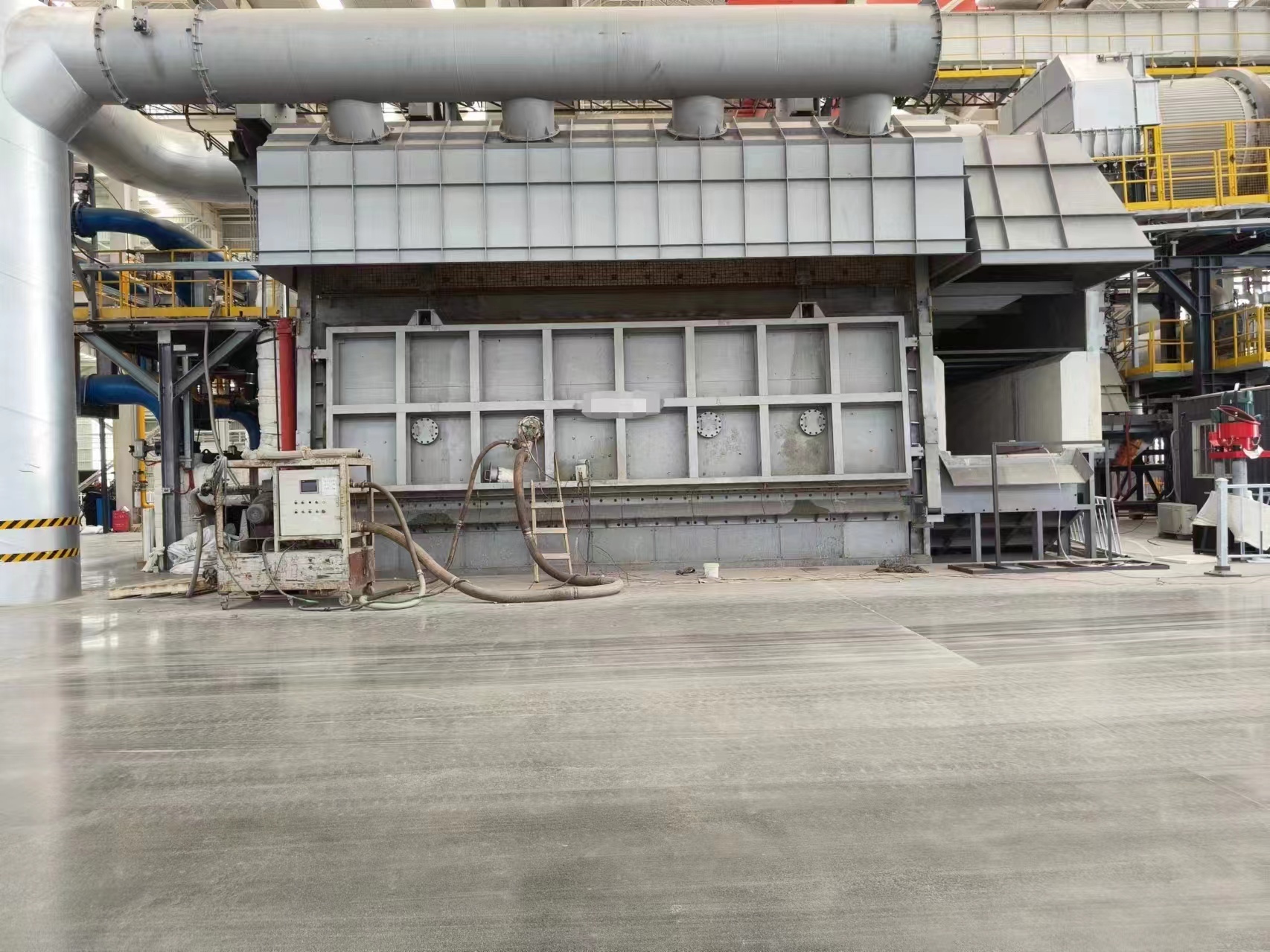
To resist these forces, the metal framework of a movable arch roof must be made very strong. A solid arch structure is often used for movable furnace covers on large pit-type annealing furnaces. This type of furnace cover has several features: each section is designed so that it can be pushed onto the top of another section; another feature is that one silica brick is inserted between every four fireclay bricks, which almost completely eliminates the overall expansion and contraction of the brickwork. The heating and cooling of this furnace cover have never been fast enough to damage the silica bricks.
When designing a movable arch roof, convenient lifting and handling must also be considered. For this purpose, lifting holes are usually provided so that the hooks of the crane chains can pass through them.
It should also be remembered that the stress distribution during lifting should not cause permanent deformation of the metal framework; otherwise, the brickwork will become loose. Finally, since the furnace cover is movable, no permanent tie rods can be installed above it. The furnace itself must be firmly restrained in the horizontal direction to resist expansion forces. For this reason, large furnaces with movable covers are often built as pit-type furnaces, where the surrounding ground or adjacent furnace pits can provide support.
Movable Covers for Soaking Pit Furnaces
The movable covers used on pit-type furnaces are usually applied to soaking furnaces. The cover of a soaking furnace opens to one side very frequently, because the blooming mill served by the soaking furnace rolls one steel ingot every 1 to 2.5 minutes, depending on the size of the ingot and the rolling speed of the mill.
In the early stage of the steelmaking industry, furnace covers were opened hydraulically. Today, they are operated by motors installed on the furnace cover. Each cover is operated by either one motor or two motors.
When one motor is used, each supporting slide rail has a descending section, and the wheels of the furnace cover drop into this section at the end of the closing travel. If the furnace cover is equipped with two motors, one motor is used for vertical lifting and the other for horizontal movement.
The operator controlling the furnace cover is not exposed to high temperature. Part of the operation depends on signals from the crane operator. If an independently movable sand-seal cover is installed, the entire furnace cover does not need to move vertically. Metal parts without water cooling are made of heat-resistant alloy.
Because soaking furnace covers are opened and closed frequently, they must be especially strong and durable. The brickwork undergoes repeated heating and cooling, which intensifies loosening and collapse of the bricks. The design described in the source has proven effective.
Since around 1950, many engineers have preferred soaking furnace covers cast with refractory concrete. However, practice has shown that, compared with covers built with high-grade refractory clay bricks, soaking furnace covers made of refractory concrete need to be replaced more frequently.
Charging and Discharging Materials in Furnaces With Movable Covers
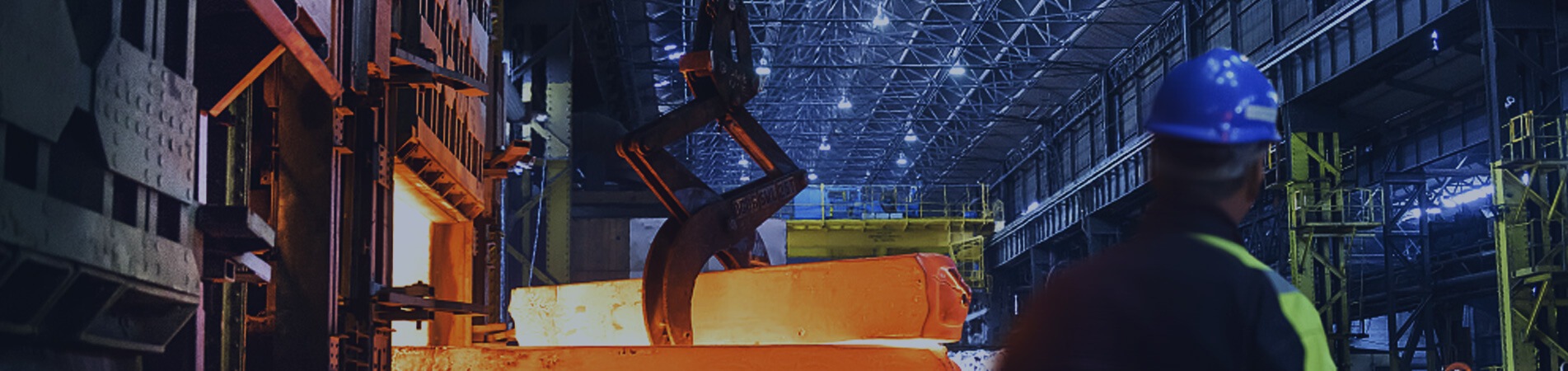
For furnaces with movable covers, ordinary cranes can be used when both the charge and the furnace are relatively cold. However, if hot materials are charged into or discharged from a pit furnace with a movable cover, ordinary cranes create very unfavorable working conditions for operators.
This is because the steel ingot swings on the crane chain, and one worker must stand beside the open furnace and use a hooked rod to control the swing of the ingot. Due to the intense heat radiation from the open furnace, the operator is severely exposed to heat, so the control of the swinging ingot is often poor. As a result, the hot ingot may strike the furnace side wall or the furnace cover, damaging or knocking down the brickwork.
For this reason, pit furnaces now use tong-type cranes, also known as soaking furnace cranes.
Heating Long and Heavy Parts in Pit Furnaces
Long and heavy parts, such as large-diameter gun barrels, are sometimes heated in pit furnaces. This method requires very tall workshops and expensive cranes.
To lower a long part into a pit furnace, a tool is needed to clamp it and raise it from a horizontal position to a vertical position. When the heated blank is transported to the forging press, the process is reversed.
Therefore, long and heavy parts are often heated and annealed in bogie hearth furnaces.
Bogie Hearth Furnaces
From the viewpoint of heat transfer, or for uniform heating, ordinary bogie hearth furnaces generally have no special advantage. Their value lies mainly in the convenience they provide for mechanical handling of the charge.
One type of bogie hearth furnace is used for annealing long parts, such as ship shafts. Another cross-sectional structure is suitable for very heavy steel ingots or large high-pressure vessels. This type of bogie hearth furnace is the only practical furnace for heating extremely large steel ingots, and even heavier ingots can be heated in the same furnace.
When hot ingots of this size are lifted from the bogie, the commanding personnel should not stand close to the ingot.
Disadvantages of Bogie Hearth Furnaces
Bogie hearth furnaces also have disadvantages. When the bogie is pulled out of a high-temperature furnace, the radiant heat from the furnace chamber is directed toward the ground. This ground surface cannot be built with ordinary cement concrete. It must be covered with refractory bricks or constructed with refractory concrete.
The visible source text ends here; the remaining sentence is cut off in the image.