
Blast Furnace in Steel Industry: Process, Efficiency, and Industrial Advantages
Blast Furnace in Steel Industry
A blast furnace in the steel industry is a large-scale metallurgical reactor used to convert iron ore into molten iron through high-temperature reduction using coke and hot air blast.
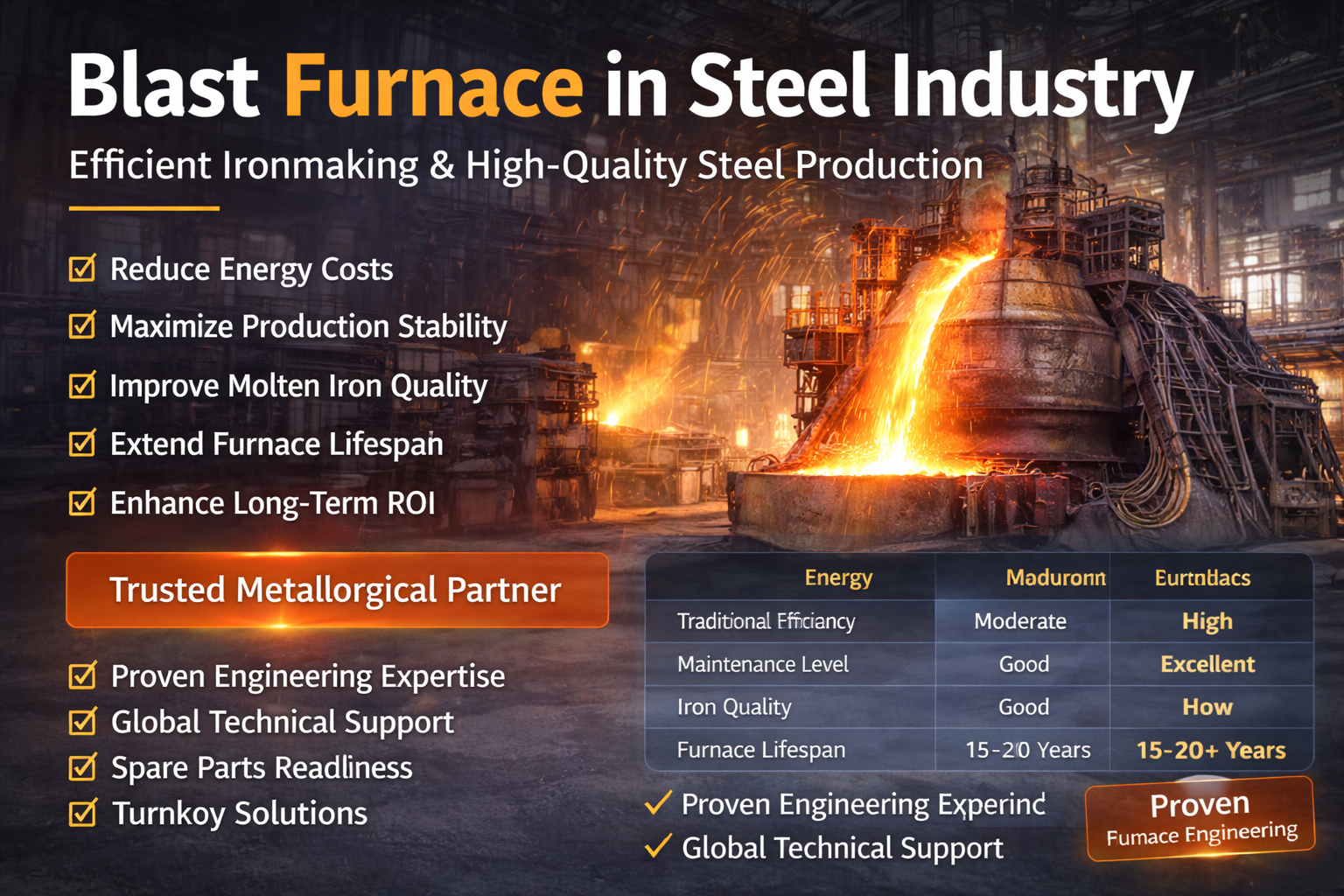
The molten iron produced in a blast furnace is the primary raw material for steel production and is typically transferred to basic oxygen furnaces (BOF) or other steelmaking units.
In modern integrated steel plants, blast furnaces operate continuously for 10–20 years without complete shutdown, producing thousands of tons of molten iron per day.
For steel plant owners, general managers, and technical directors, the performance of a blast furnace determines:
-
Plant production capacity
-
Energy consumption levels
-
Product quality stability
-
Maintenance risk
-
Long-term profitability
A well-engineered blast furnace system can significantly reduce energy consumption, stabilize molten iron output, and improve overall plant efficiency.
Why Blast Furnaces Remain Critical in Modern Steel Production
Despite the development of electric arc furnaces, blast furnaces still dominate large-scale steel production worldwide.
Approximately 70% of global steel production relies on blast furnace-based ironmaking.
Blast furnaces are particularly advantageous for large integrated steel plants because they offer:
-
Continuous high-volume production
-
Stable metallurgical processes
-
Efficient utilization of raw materials
-
Consistent molten iron quality
For steel manufacturers operating at industrial scale, blast furnaces provide unmatched production stability and economic efficiency.
Step 2: Hot Air Blast Injection
Preheated air, often reaching 1000°C – 1200°C, is injected into the lower section of the furnace through tuyeres.
This hot blast ignites coke and generates extremely high temperatures.
Step 3: Chemical Reduction
Inside the furnace, carbon monoxide generated from coke reacts with iron oxide.
This chemical reaction removes oxygen from iron ore, producing molten iron.
Step 4: Slag Formation
Limestone reacts with impurities to form slag.
Slag floats above molten iron and can be removed easily.
Step 5: Molten Iron Tapping
Molten iron collects at the bottom of the furnace and is periodically tapped.
The molten metal is then transported to steelmaking facilities for further refining.
How Modern Blast Furnaces Improve Energy Efficiency
Energy cost is one of the largest operating expenses in steel production.
Modern blast furnace engineering focuses heavily on energy optimization.
Top Gas Recovery Systems
Blast furnace gas contains valuable energy.
Gas recovery turbines convert waste gas pressure into electricity.
This can reduce plant energy costs by up to 30%.
Advanced Hot Blast Technology
Modern hot blast stoves preheat air to extremely high temperatures.
Higher air temperatures increase furnace efficiency and reduce coke consumption.
Optimized Burden Distribution
Advanced charging systems ensure even distribution of raw materials.
This improves reaction efficiency and reduces energy loss.
Production Stability and Output Consistency
Steel plants depend on stable molten iron production to keep downstream processes running smoothly.
A poorly performing blast furnace can disrupt the entire plant.
Modern blast furnace systems improve stability through:
Automated Process Control
Digital monitoring systems track:
-
temperature distribution
-
gas flow
-
pressure conditions
-
burden descent rate
Real-Time Process Optimization
Advanced sensors and control algorithms allow operators to adjust furnace conditions instantly.
Consistent Iron Quality
Stable furnace conditions produce molten iron with consistent chemical composition.
This improves steel quality in downstream processing.
Reducing Downtime and Operational Risk
Blast furnace downtime can cause enormous production losses.
Preventing unexpected shutdowns is therefore a top priority.
Durable Refractory Lining
High-quality refractory materials protect the furnace interior from extreme temperatures.
Proper refractory design can extend furnace life beyond 15 years.
Water Cooling Systems
Advanced cooling systems protect furnace walls and structural components.
Predictive Maintenance
Modern blast furnaces integrate monitoring systems that detect wear or abnormal conditions before failure occurs.
These technologies allow maintenance teams to schedule repairs proactively.
Selecting a Reliable Blast Furnace Engineering Partner
For steel manufacturers planning to build or upgrade blast furnace systems, choosing the right engineering partner is critical.
Common risks in furnace procurement include:
-
exaggerated technical claims
-
insufficient engineering support
-
delayed spare parts supply
-
weak overseas service capabilities
A reliable blast furnace partner should offer:
Proven Engineering Experience
Decades of furnace design and construction expertise.
International Project Experience
Experience delivering equipment for steel plants worldwide.
Global Technical Support
Fast-response engineering teams for overseas installations and maintenance.
Spare Parts Logistics
Reliable spare parts availability is essential for long-term furnace operation.
Industrial buyers increasingly prefer suppliers who can provide complete metallurgical solutions, including design, installation, commissioning, and long-term service support.
Frequently Asked Questions
What is the main function of a blast furnace in the steel industry?
The blast furnace converts iron ore into molten iron, which is the primary raw material used for steel production.
What temperature does a blast furnace operate at?
Blast furnaces typically operate at temperatures between 1500°C and 2000°C.
How long can a blast furnace operate continuously?
Modern blast furnaces can operate continuously for 10–20 years before major relining is required.
What fuels are used in blast furnaces?
The primary fuel is coke, although pulverized coal injection is also commonly used to reduce coke consumption.
Can blast furnace efficiency be improved?
Yes. Efficiency improvements include:
-
better burden distribution
-
hot blast temperature optimization
-
top gas recovery systems
-
advanced process monitoring
Conclusion
The blast furnace remains one of the most important technologies in the global steel industry, enabling large-scale production of molten iron with high efficiency and stability.
For steel plant owners and technical leaders, a well-designed blast furnace system provides:
-
reliable long-term operation
-
high production capacity
-
improved energy efficiency
-
stable molten iron quality
-
strong return on capital investment
Selecting experienced engineering partners and reliable furnace technology ensures that blast furnace operations remain safe, efficient, and profitable for decades.