
Induction Furnace Industrial Solutions
High-Performance Induction Furnace Industrial Solutions: A Strategic Guide to ROI and Operational Stability
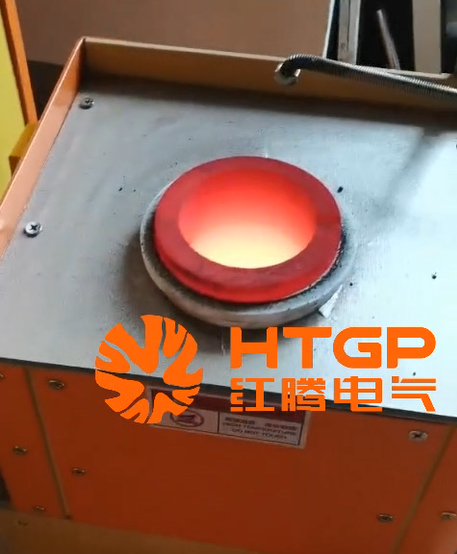
An induction furnace industrial system is an advanced electro-thermal melting solution that utilizes electromagnetic induction to heat and melt conductive metals—primarily steel, iron, aluminum, and copper—without direct contact between the heat source and the charge. By passing a high-frequency alternating current through a water-cooled copper coil, the furnace induces powerful eddy currents directly within the metal, achieving thermal efficiency rates often exceeding 90%. For foundry owners and technical directors, these systems represent the transition from high-emission, inefficient legacy melting to precision-controlled, high-yield production environments.
In today’s competitive metallurgical landscape, an induction furnace industrial unit is not a mere equipment purchase; it is a strategic asset. The shift toward these systems is driven by the need for metallurgical purity, consistent temperature control, and a drastic reduction in carbon footprints, aligning with global industrial compliance standards.
1. Total Cost of Ownership (TCO): Decoding the Real Price of Melting
For a General Manager or Factory Owner, the sticker price of an induction furnace industrial system is a secondary metric. The primary driver of profitability is the Total Cost of Ownership (TCO) over a 10-to-15-year lifecycle. High-tier engineering focuses on minimizing “invisible leaks”—energy dissipation, metal burn-off, and unplanned maintenance.
A standard market furnace may seem attractive initially, but a 5% difference in electrical efficiency can result in hundreds of thousands of dollars in wasted OpEx over five years. Our systems are engineered to tighten these variables, ensuring that your capital expenditure (CapEx) converts into a sustainable competitive advantage.
Financial Impact: Standard vs. Engineered Induction Systems
| Performance Driver | Standard Market Unit | High-Performance Industrial System | 10-Year Financial Impact |
| Energy Efficiency | $80\% – 85\%$ | $95\% – 97\%$ (IGBT Driven) | $>\$1.2M$ Savings (at $10,000$t/yr) |
| Metal Oxidation (Loss) | $2.5\% – 3.5\%$ | $<0.8\%$ | $+\$450,000$ Recovered Yield |
| Refractory Life | $60$ Heats | $120+$ Heats | $50\%$ Reduction in Relining Cost |
| Unplanned Downtime | $5\% – 8\%$ Annual | $<1\%$ Annual | Protected Market Reputation |
2. Maximizing Metallurgical Purity and Output Consistency
Technical Directors face the constant challenge of “dimensional drift” and chemical inconsistency in castings. A low-grade induction furnace industrial system often suffers from thermal stratification and poor homogenization.
Our engineering utilizes Electromagnetic Stirring (EMS). As the induction field penetrates the melt, it creates a natural toroidal flow. This motion ensures that alloying elements are distributed uniformly within seconds and that non-metallic inclusions float to the surface for efficient removal.
-
Thermal Precision: PID-controlled power matching maintains temperature within $\pm 2^\circ\text{C}$.
-
Alloy Homogeneity: Eliminates “cold spots” at the bottom of the crucible.
-
Hydrogen Control: Optimized melting speeds reduce the time the liquid metal is exposed to ambient humidity, significantly lowering porosity in the final product.
3. Energy Efficiency: Converting Kilowatts into Profit
Energy is the largest recurring cost in any foundry. To optimize an induction furnace industrial operation, the power supply architecture is critical. We have transitioned away from traditional SCR (Silicon Controlled Rectifier) units to advanced IGBT (Insulated Gate Bipolar Transistor) solid-state power supplies.
Unlike SCR units, which draw “dirty” reactive power and incur utility penalties, IGBT systems maintain a constant power factor of 0.96 or higher regardless of power levels. This architecture reduces the harmonic distortion on your plant’s grid, protecting other sensitive electronics and reducing your electricity bill per ton of melt by 15% to 22%.
4. Mitigating the Risk of Unplanned Downtime
The most expensive furnace is the one that is cold during a production shift. Engineering Managers are rightfully concerned about the “Service Vacuum” when importing heavy equipment. Our induction furnace industrial designs address this through Industrial Redundancy Engineering:
-
Modular Power Electronics: If one power module encounters a fault, the system can often continue operating at reduced capacity rather than suffering a total shutdown.
-
Predictive Diagnostics: Integrated IIoT sensors monitor water flow, coil resistance, and capacitor health, flagging anomalies weeks before a failure occurs.
-
Global Component Standards: We utilize world-class components (Siemens PLC, Schneider breakers, ABB capacitors). This ensures your local maintenance team can source a replacement relay or breaker in hours, not weeks, from local wholesalers.
5. Overseas Support: A Long-Term Industrial Partnership
Buying an induction furnace industrial unit from an overseas partner requires trust in their export pedigree. With over 15 years of experience serving markets in the US, Europe, and SE Asia, we position ourselves as a partner, not just a vendor.
-
48-Hour Spare Parts Logistics: We maintain dedicated export inventory for high-wear parts, utilizing express air freight to ensure they reach your site within two business days.
-
Remote Engineering Access: Through encrypted VPN gateways, our senior engineers in Zhejiang can troubleshoot your PLC logic and calibrate parameters in real-time, bridging the time-zone gap.
-
On-Site Commissioning: We deploy senior technical teams for installation and Factory Acceptance Testing (FAT), ensuring that the Actual Capacity meets the technical parameters promised.
6. Financial Recovery: Calculating the Payback Period
A high-performance induction furnace industrial system is a self-financing asset. When you calculate the “Efficiency Delta”—the combined savings from energy, metal loss, and reduced maintenance—most of our clients achieve full Return on Investment (ROI) within 14 to 20 months.
For a facility processing 5,000 tons of ductile iron annually, a 1.5% reduction in metal burn-off alone (at $600/ton) represents a $45,000 annual gain. When added to energy savings, the furnace effectively pays for its own upgrade, freeing up capital for further plant expansion.
FAQ: Strategic Insights for Industrial Buyers
Q: How do you guarantee the actual capacity matches the datasheet?
A: We conduct a mandatory Full-Load Factory Acceptance Test (FAT) before shipment. We document the exact melt time and kWh/ton consumption using calibrated meters. You receive a verified performance report; if the machine doesn’t hit the numbers, it doesn’t ship.
Q: What is the risk of the refractory lining failing prematurely?
A: Most failures are due to improper sintering or thermal shock. We provide automated “Sintering Cycles” in our PLC software, which follows a strict temperature ramp-up curve, ensuring a hard, vitrified face that resists metal penetration.
Q: How do you handle maintenance in a different time zone?
A: Our remote diagnostic tools allow us to resolve 90% of operational glitches instantly via software. For hardware, we provide a “Critical Spares Kit” with the initial purchase, covering the most common wear items for the first 24 months.
Q: Is the system compatible with 100% scrap charges?
A: Absolutely. Our frequency-tuning technology is designed to handle varying scrap densities. The electromagnetic stirring ensures that light scrap is submerged quickly, preventing oxidation and maximizing yield.