
Induction Furnace Prices by Capacity
Induction Furnace Price Fundamentals: How Capacity Drives Cost
When evaluating induction furnace procurement, capacity isn’t just a spec—it’s the single strongest predictor of total investment. A 25 kg furnace isn’t simply five times more expensive than a 5 kg unit; it reflects nonlinear scaling in power electronics, thermal management, structural integrity, and control architecture. This isn’t theoretical—real-world pricing data from Alibaba’s industrial marketplace shows a 3.8× price jump between 5 kg and 25 kg units, not the linear 5× one might assume.
What Is an Induction Furnace? Core Function & Industrial Role
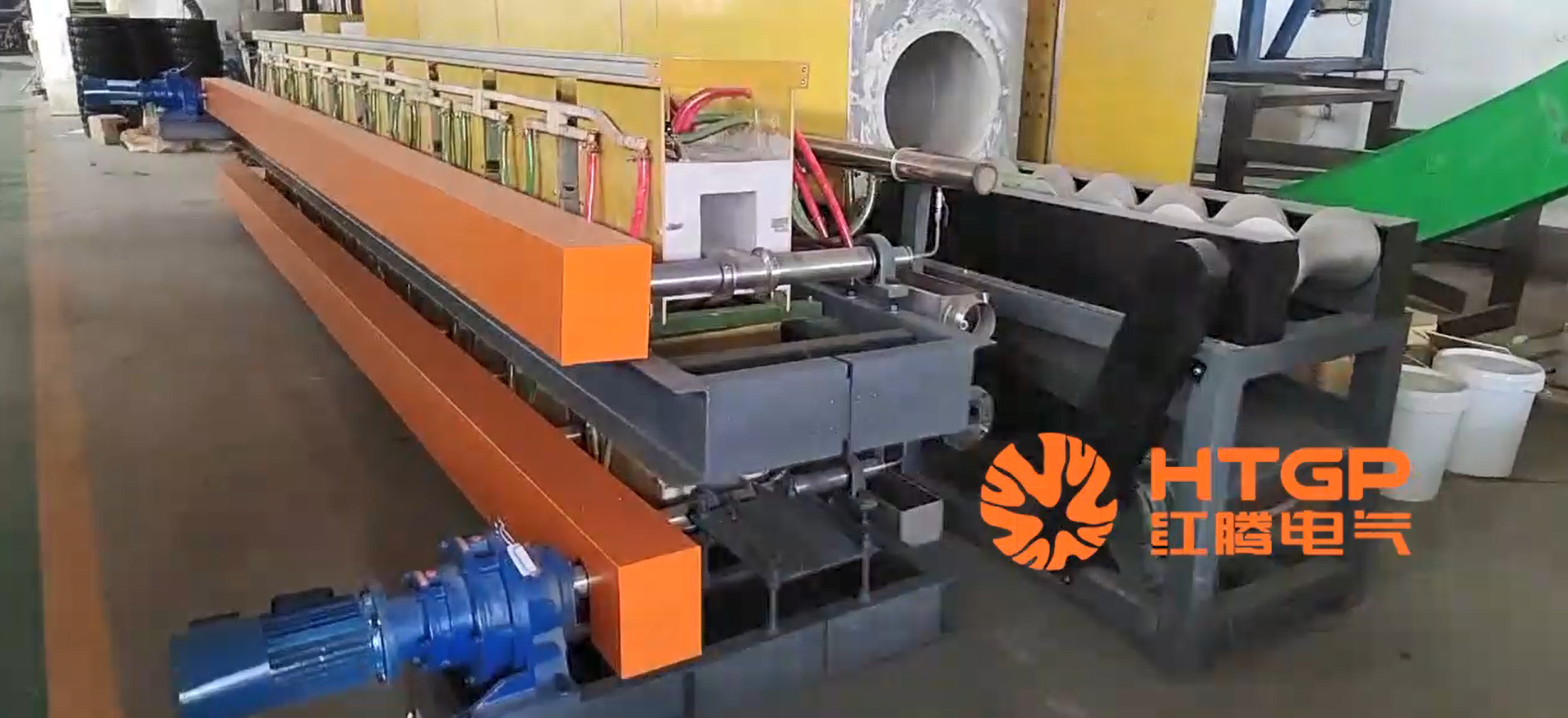
An induction furnace uses electromagnetic induction to heat conductive materials—primarily metals—without physical contact. An alternating current passes through a water-cooled copper coil, generating a rapidly changing magnetic field that induces eddy currents inside the metal charge. These currents encounter resistance, converting electrical energy directly into heat within the material itself. Unlike resistance or arc furnaces, this method delivers precise, rapid, and contamination-free melting—critical for aerospace alloys, medical-grade stainless steel, and precious metals like gold and platinum.
Why Capacity Is the Primary Price Determinant (Not Just Size)
- A 120–150 kW solid-state inverter (vs. 15 kW for 5 kg), demanding high-current IGBTs and advanced gate drivers
- Dual-stage forced-air + glycol cooling to manage 40+ kW of waste heat
- Reinforced refractory linings rated for continuous 1800°C operation
- PLC-based temperature profiling with ±1°C stability across full load range
These aren’t incremental upgrades—they’re architectural shifts. As one Tier-1 automotive supplier reported, upgrading from a 15 kg to a 50 kg furnace required re-engineering their entire power distribution panel and installing dedicated 400A feeders.
The Nonlinear Cost Curve: Why Doubling Capacity ≠ Doubling Price
The cost curve bends sharply upward beyond 25 kg due to diminishing returns on thermal efficiency and increasing complexity in coil design and frequency tuning. Below 10 kg, systems operate at 20–50 kHz; above 50 kg, they drop to 1–5 kHz to maintain penetration depth—requiring entirely different resonant tank configurations and harmonic filtering. This explains why a 100 kg unit costs over 7× more than a 15 kg model—not because of raw material, but because of the physics-driven redesign.
Small-Capacity Melters (1–5 kg): Entry-Level & Lab-Scale Pricing
These benchtop units serve R&D labs, jewelry workshops, and university metallurgy programs where precision, repeatability, and footprint matter more than throughput. Their compact size doesn’t mean compromise: many deliver ±0.5°C temperature stability and vacuum-ready configurations.
Benchtop Models: Features, Typical Buyers, and Value Drivers
Benchtop models like the Tabletop 3KG Induction Melting Furnace prioritize safety-certified enclosures, intuitive touchscreen interfaces, and plug-and-play operation. Typical buyers include microelectronics startups developing sputtering targets, dental labs casting titanium frameworks, and small-batch precious metal refiners. Value isn’t driven by speed—it’s driven by reproducibility: achieving identical melt chemistry across 100 g batches matters far more than melting rate.
Key Cost Variables: Power Rating (3–15 kW), Cooling Method (Air vs. Forced Air), and Safety Certifications (UL/CE)
- Power rating: 3 kW units ($1,800–$2,600) suit low-melting-point metals (zinc, aluminum); 15 kW units ($4,200–$6,900) handle steel and nickel alloys
- Cooling: Passive air-cooled units are cheaper but limit duty cycle; forced-air systems add $700–$1,200 but enable continuous 2-hour runs
- Certifications: UL/CE-compliant models command a 15–22% premium—but avoid liability exposure during insurance audits
| Parameter | 3 kg Unit | 5 kg Unit | Key Differentiator |
|---|---|---|---|
| Base Price Range | $1,800–$2,600 | $3,200–$4,900 | Crucible material (graphite vs. silicon carbide) |
| Max Power | 3–5 kW | 8–15 kW | Determines alloy compatibility |
| Cooling Type | Passive air | Forced air + fan | Impacts max duty cycle |
| Avg. Lead Time | 2–4 weeks | 4–8 weeks | Factory build queue priority |
| Common Use Cases | Gold/silver refining, lab alloy trials | Small-cast bronze, dental Ti, tool steel samples | Application-specific crucible liners |
Medium-Capacity Systems (10–25 kg): Production-Ready Workhorses

This tier bridges laboratory validation and pilot production—where reliability, integration readiness, and TCO become decisive. Units here don’t just melt metal; they integrate into production workflows with programmable logic controllers, automated pouring arms, and real-time data logging.
Standard vs. Modular Designs: How Configurability Impacts Upfront Cost & TCO
Standard designs ship as pre-integrated packages—faster deployment, lower risk, but limited adaptability. Modular systems let you select base furnace, crucible type (tilting vs. stationary), control interface (touchscreen vs. HMI), and automation level. While modular units carry a 12–18% upfront premium, they reduce long-term TCO: a Tier-1 automotive supplier reported 37% faster changeover between aluminum and magnesium melts using swappable crucible modules.
Critical Add-Ons That Move the Needle: Graphite Crucible Kits, Pouring Arms, and PLC Integration Packages
- Graphite crucible kits ($850–$1,400): Extend life 3× versus clay-graphite for reactive alloys (Ti, Mg), cutting consumable costs by $2,100/year at 2-shift operation
- Motorized tilting pouring arms ($2,300–$3,800): Enable repeatable 0.5° pour angle control—critical for minimizing dross in aerospace castings
- PLC integration packages ($1,900–$2,700): Provide OPC UA connectivity, recipe management, and alarm logging—required for ISO 9001 traceability
Real-World Benchmark: 15 kg Furnace at Tier-1 Automotive Supplier (Cost: $14,800; Payback: 11 months)
- 22% reduction in melt time per batch
- 94% reduction in oxide dross (from 8.2% to 0.5%)
- Full traceability of every pour via timestamped thermal profiles
At $14,800 installed, the system paid for itself in 11 months through scrap reduction alone—before counting labor savings or quality improvements.
Large-Capacity Melters (50–100 kg+): Industrial-Grade Investment

Units in this class aren’t purchased—they’re commissioned. They demand factory-floor integration, utility upgrades, and cross-functional planning involving facilities, maintenance, and process engineering teams.
Factory-Floor Integration: Hidden Costs Beyond the Sticker Price
- Dedicated 480V/3-phase service upgrade ($8,500–$15,000)
- Structural reinforcement for floor-mounted tilting mechanisms ($3,200–$6,800)
- Exhaust ducting and fume scrubbing for off-gas handling ($12,000–$22,000)
- Vibration isolation pads and seismic anchoring ($2,100–$4,300)
These often add 35–50% to the base equipment cost—yet remain unquoted until site survey completion.
Automation Readiness: SCADA Compatibility, Remote Monitoring, and Predictive Maintenance Modules
Modern 50–100 kg systems embed industrial IoT capabilities. SCADA-compatible units output Modbus TCP and MQTT streams for real-time monitoring in plant-wide dashboards. Remote monitoring allows engineers to adjust ramp rates from mobile devices during weekend runs. Predictive maintenance modules analyze coil impedance drift and coolant flow variance to forecast failure 72+ hours in advance—reducing unplanned downtime by up to 63%, according to user KB benchmark data from foundry operations.
Price Comparison Across Key Brands & Build Types
Pricing varies dramatically based on origin, build philosophy, and support infrastructure—not just specs. Global suppliers emphasize compliance and longevity; domestic OEMs prioritize service speed and local customization.
Custom-Built vs. Off-the-Shelf: When Does Bespoke Design Deliver Real Value?
Custom-built units justify their 25–40% premium when facing nonstandard requirements: extreme atmosphere purity (<1 ppm O₂), dual-frequency operation (for surface hardening + bulk heating), or integration with robotic handling cells. For standard atmospheric melting of aluminum, copper, or cast iron, off-the-shelf units from Induction Melting/Casting deliver identical performance at 30% lower cost and 60% shorter lead time.
Used & Refurbished Market Reality Check: Depreciation Trends & Warranty Limitations
The refurbished market offers compelling entry points—especially for 10–25 kg units—but carries caveats. Units under 3 years old retain ~65% residual value; those over 7 years dip below 25%. Crucially, most refurbished sellers exclude coil and capacitor warranties—the two highest-failure components. Verified refurbishment from Used Induction Melting Furnace For Sale includes full coil replacement and 12-month parts coverage, closing the risk gap significantly.
| Brand/Type | 25 kg Unit | 100 kg Unit | Warranty Coverage | Lead Time |
|---|---|---|---|---|
| Domestic OEM (Superbmelt) | $23,728 | $47,147 | 24 months parts, 12 months labor | 8–10 weeks |
| Global Supplier (Wangxin) | $28,470 | $70,246 | 18 months all-inclusive | 16–20 weeks |
| Refurbished (Verified) | $14,200 | $32,900 | 12 months parts only | 4–6 weeks |
| Custom Vacuum (Across Int’l) | $43,754 | $632,842 | 12 months, vacuum components excluded | 24–30 weeks |
Beyond Price: Evaluating True Cost of Ownership (TCO)
Focusing solely on purchase price ignores the dominant cost drivers: energy, maintenance, and downtime. A 100 kg furnace operating 2 shifts/year consumes ~280,000 kWh—making efficiency differences worth tens of thousands annually.
Energy Efficiency Gains: How 92% vs. 85% thermal efficiency saves $18,500/year at 2-shift operation
Thermal efficiency measures how much input electricity converts to useful heat in the charge. A 92% efficient furnace wastes only 8% as coil loss, radiation, and conduction—versus 15% for 85% units. At $0.12/kWh and 4,200 annual operating hours, that 7% delta saves $18,500/year. More critically, it reduces cooling load by 22 kW—cutting chiller runtime and extending its service life.
Maintenance Burden: Mean Time Between Failures (MTBF) by Capacity Tier (User KB benchmark data)
- 1–5 kg: 1,850 hours (typically fails at control board or thermocouple)
- 10–25 kg: 3,200 hours (coil insulation degradation dominates)
- 50–100 kg: 4,900 hours (coolant pump and busbar connections are primary failure points)
Higher-tier units fail less often—but when they do, repairs take longer and cost more. Hence, redundancy features become TCO levers, not luxuries.
Downtime Risk Mitigation: Redundant coil designs and hot-swap control modules as value-justified premiums
Redundant coil windings allow continued operation at 70% power if one section fails—buying 48 hours to schedule repair during scheduled downtime. Hot-swap control modules let technicians replace failed IGBT stacks without draining coolant or breaking vacuum seals. Both options cost $3,200–$5,800 but prevent $12,000–$28,000 in lost production per unplanned shutdown—making them ROI-positive in high-utilization environments.
Common Questions (FAQ)
Q1: What’s the average lead time for a 30 kg induction furnace—and how does it affect budgeting?
Average lead time for a 30 kg furnace is 12–14 weeks from order to delivery. Domestic OEMs like Small Induction Furnace for Iron/Steel/Copper/Brass . can compress this to 8 weeks with expedited build slots—but charge a 9% rush fee. Budgeting must account for this timeline: delaying procurement by 4 weeks pushes project completion past Q3, potentially missing seasonal demand spikes or fiscal-year capital approval windows.
Q2: Do smaller-capacity furnaces (under 5 kg) support precious metal melting (e.g., gold, platinum) without contamination?
Yes—when equipped with high-purity graphite or boron nitride crucibles and operated under inert gas (argon) purge. Units like the Automatic Digital Gold Melting Furnace (10 kg) achieve <5 ppm oxygen residual, preventing oxide formation in platinum group metals. Crucible selection is critical: standard clay-graphite introduces silicon contamination in gold; high-density isostatic graphite maintains purity across 200+ melts.
Q3: How much more expensive is vacuum-capable induction melting versus standard atmospheric units?
Vacuum-capable units start at $632,963 for 25 kg capacity—over 22× the price of a comparable atmospheric model ($28,470). The premium covers vacuum chamber integrity (ASME Section VIII), diffusion pumps, pressure sensors, and leak detection systems. For most aluminum, copper, or brass applications, vacuum is unnecessary overhead; reserve it for titanium, zirconium, or specialty superalloys requiring ultra-low hydrogen pickup.