
Industrial Electric Muffle Furnace Model Names Explained for Industrial Applications
Industrial Electric Muffle Furnace Model Names
An industrial electric muffle furnace is a high-temperature heating system used for controlled heat treatment, material testing, metal processing, and laboratory thermal analysis.
The furnace works by isolating the heating chamber from combustion gases, ensuring clean, stable, and uniform heating conditions.
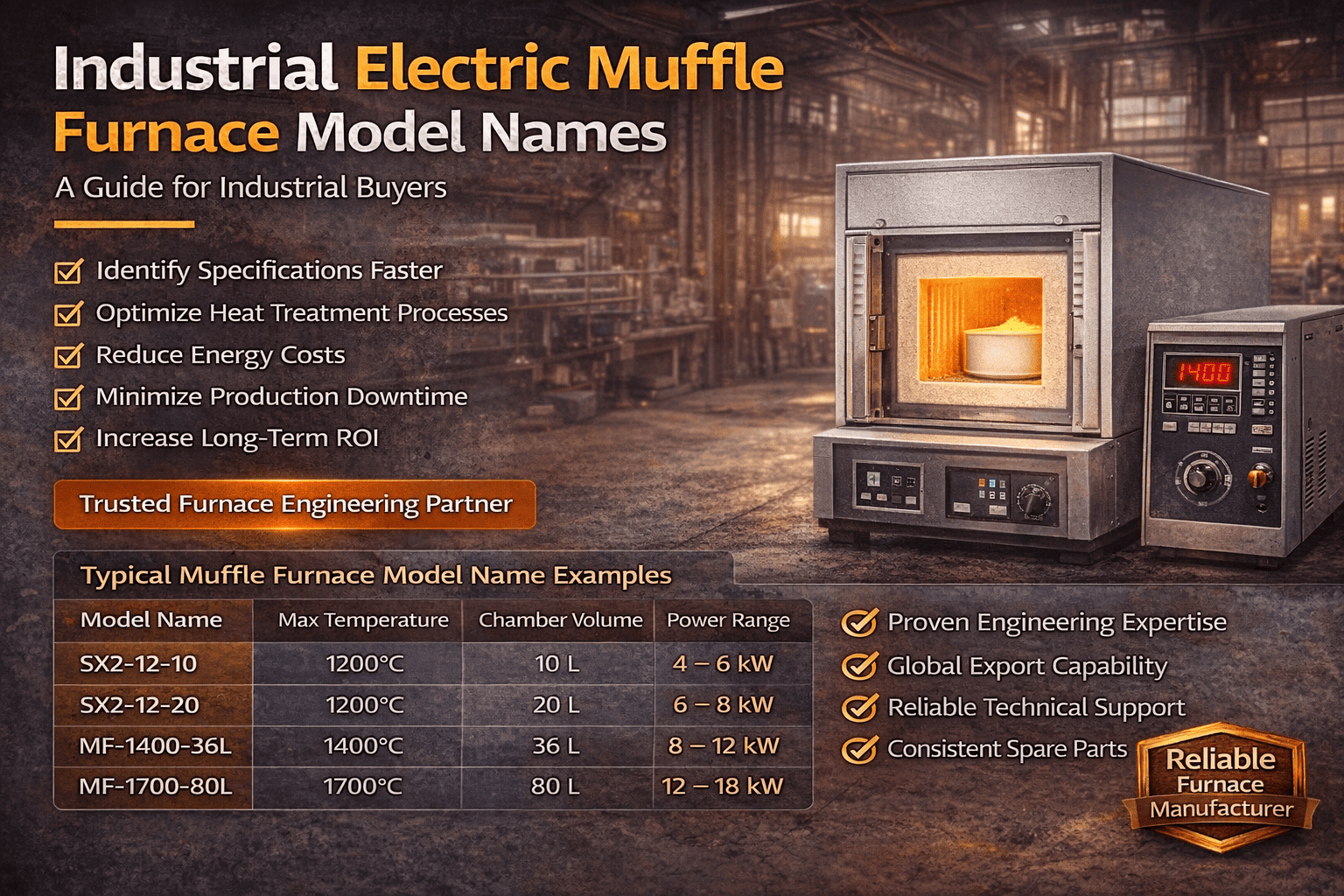
Industrial electric muffle furnace model names typically represent key technical characteristics, including:
-
furnace chamber size
-
maximum operating temperature
-
heating element configuration
-
power capacity
-
control system type
Understanding industrial electric muffle furnace model names helps plant managers and engineering teams quickly identify the right equipment for their production requirements.
More importantly, selecting the correct furnace model directly affects energy efficiency, production stability, and long-term operational costs.
What Is an Industrial Electric Muffle Furnace
An industrial electric muffle furnace is a high-temperature electric heating furnace designed to process materials under controlled thermal conditions.
The term muffle refers to a sealed chamber that isolates the workpiece from direct contact with heating elements or combustion gases.
This design ensures:
-
stable temperature distribution
-
minimal contamination
-
precise process control
Industrial muffle furnaces are widely used in:
-
metal heat treatment
-
powder metallurgy
-
ceramic processing
-
materials research laboratories
-
aerospace component manufacturing
For many industrial processes, furnace temperature stability directly determines product quality and consistency.
Common Model Naming Systems Used by Manufacturers
Industrial furnace manufacturers often use standardized naming patterns.
Below are several widely used model naming structures.
SX Series Muffle Furnaces
The SX series is one of the most common industrial muffle furnace types.
Typical characteristics:
-
temperature range up to 1200°C
-
electric resistance heating
-
compact chamber design
-
digital temperature control
These furnaces are widely used in laboratories and light industrial production.
MF Series High-Temperature Furnaces
MF series furnaces are often used for higher temperature applications.
Typical capabilities include:
-
maximum temperature up to 1700°C
-
high-purity refractory insulation
-
programmable control systems
These furnaces are commonly used in advanced material processing and research facilities.
Box-Type Electric Muffle Furnaces
Box furnaces represent a broader category used in industrial heat treatment.
These systems offer:
-
larger chamber capacity
-
higher power ratings
-
improved thermal insulation
They are commonly used in manufacturing environments that require continuous thermal processing.
How the Right Furnace Model Improves Production Efficiency
Choosing the correct industrial electric muffle furnace model has a direct impact on manufacturing performance.
Several operational advantages include:
Faster Heating Cycles
Advanced heating elements and optimized insulation reduce warm-up time.
This shortens production cycles and increases daily throughput.
Stable Temperature Distribution
Uniform heating improves material quality and reduces processing errors.
For heat treatment processes, consistent temperature distribution ensures predictable metallurgical results.
Precise Process Control
Modern industrial furnaces use programmable controllers that automate heating curves.
This improves repeatability and reduces operator error.
Reducing Energy Costs Through Proper Furnace Selection
Energy consumption is one of the largest operational expenses in thermal processing.
Selecting the appropriate furnace model can significantly reduce power usage.
Key efficiency factors include:
-
high-density insulation materials
-
optimized heating element placement
-
intelligent power control systems
Modern electric muffle furnaces can achieve thermal efficiency improvements of 20–30% compared with older furnace designs.
For high-volume manufacturing operations, this translates into substantial annual energy savings.
Minimizing Downtime with Reliable Furnace Design
Production downtime caused by furnace failure can disrupt entire manufacturing schedules.
Reliable furnace engineering helps reduce operational risk.
Key design features include:
Modular Heating Elements
Heating elements can be replaced quickly without dismantling the entire furnace structure.
Smart Monitoring Systems
Sensors continuously monitor temperature, power load, and heating element condition.
Early detection prevents major equipment failures.
Durable Refractory Construction
High-quality refractory materials extend furnace lifespan and reduce maintenance frequency.
A well-designed industrial furnace can operate reliably for 10–15 years or longer.
Choosing the Right Industrial Furnace Manufacturer
Selecting a furnace model is only one part of the procurement process.
The reliability of the furnace manufacturer plays an equally important role.
Industrial buyers frequently encounter problems such as:
-
exaggerated equipment specifications
-
inconsistent temperature performance
-
delayed international service support
-
difficulty sourcing spare parts
A trusted furnace supplier should offer more than equipment delivery.
Reliable manufacturers provide:
Strong Engineering Capabilities
Experienced engineering teams design furnace systems tailored to specific industrial processes.
Global Export Experience
Industrial furnace suppliers must understand international compliance standards and installation requirements.
Responsive Technical Support
Quick technical assistance minimizes production interruptions when issues arise.
Long-Term Spare Parts Availability
A stable parts supply chain ensures equipment can operate reliably for many years.
Industrial buyers increasingly view furnace suppliers as long-term technical partners, not simply equipment vendors.
Frequently Asked Questions
What do industrial electric muffle furnace model names mean?
Model names usually indicate furnace type, maximum temperature, and chamber size.
How do I choose the right muffle furnace model?
The correct model depends on required temperature, chamber capacity, production throughput, and process control requirements.
What is the typical temperature range of industrial muffle furnaces?
Most industrial electric muffle furnaces operate between 1000°C and 1700°C.
How long does an industrial muffle furnace last?
With proper maintenance, most furnaces operate reliably for 10–15 years.
Are electric muffle furnaces energy efficient?
Yes. Modern furnace designs with advanced insulation and digital power control significantly reduce energy consumption.
Conclusion
Understanding industrial electric muffle furnace model names allows engineers and plant managers to identify the most suitable furnace for their production requirements.
However, selecting the right furnace involves more than comparing specifications.
Industrial decision makers must evaluate:
-
operational efficiency
-
long-term reliability
-
maintenance complexity
-
energy consumption
-
manufacturer support capability
A properly engineered furnace improves production stability, reduces energy costs, and increases overall manufacturing efficiency.
For companies operating in demanding industrial environments, partnering with an experienced furnace manufacturer ensures that the equipment performs reliably throughout its entire lifecycle.