

Industrial Furnace Transformer
Industrial Furnace Transformer: Why 24V Secondary Voltage Is Non-Negotiable
What Is an Industrial Furnace Transformer? Core Function & Safety Imperative
An industrial furnace transformer isn’t just a voltage reducer—it’s the critical safety barrier between high-voltage primary circuits and human operators standing on wet, conductive foundry floors. Unlike general-purpose transformers, it’s engineered for thermal extremes, mechanical shock, and intrinsic safety compliance—not efficiency optimization.
Purpose-Built for High-Temperature Industrial Environments
Furnace transformers operate continuously near furnaces reaching 1,200°C+, exposing them to ambient temperatures up to 85°C. This demands Class H insulation (180°C-rated), robust potting compounds, and copper windings with low thermal resistance—features standard in furnace transformers from Voltatransformers. The General Safety and Performance Requirements of the Medical Devices Regulation 2017/745 emphasize environmental resilience during transport and storage—principles directly transferable to industrial transformer design under thermal cycling stress.
Critical Role in Protecting Human Operators and Control Systems
You’re not protecting PLCs—you’re protecting people. A single fault in a 120V control circuit can deliver lethal current across a damp concrete floor. The transformer isolates the control loop, ensuring that even if primary-side insulation fails, the secondary side remains intrinsically safe. This physical separation is non-negotiable—and why UL 508A explicitly prohibits direct connection of line voltage to safety relays without isolation.
How 24V Secondary Output Enables Intrinsic Safety Compliance (IEC 61508 SIL-2)
Intrinsic safety means the circuit cannot release enough energy to ignite flammable atmospheres or cause harmful electric shock—even under fault conditions. At 24V, the maximum fault current in typical control wiring stays below 100 mA, well under the 30–100 mA ventricular fibrillation threshold. IEC 61508 SIL-2 certification requires validated fault response within 100 ms; 24V systems achieve this reliably because lower voltage reduces arc sustainment time and contact erosion. This parallels the usability and essential performance safeguards mandated by IEC 60601-1-6 for medical devices—where failure isn’t just inconvenient, it’s catastrophic.
Why 24V — Not 12V, 48V, or 120V — Is the Universal Safety Standard
Voltage selection isn’t arbitrary—it’s the result of decades of empirical failure analysis, regulatory convergence, and component interoperability. 24V sits at the precise engineering inflection point where safety, reliability, and compatibility intersect.
Eliminating Electric Shock Risk in Wet/Metal-Rich Foundry Floors
Human skin resistance drops from ~100 kΩ (dry) to ~1 kΩ (wet/metal-contaminated). At 120V, even 1 kΩ yields 120 mA—potentially fatal. At 48V, it’s still 48 mA—above the safe touch threshold. At 24V? Just 24 mA—below the perception threshold for most adults. That margin matters when molten metal splashes onto boots or coolant pools around equipment bases.
Compatibility with Industry-Standard PLC I/O Modules and Safety Relays
Nearly every major PLC vendor—including Siemens, Rockwell, and Omron—designs discrete input modules for nominal 24V DC operation, with valid signal detection between 10–30V. This tolerance band ensures reliable logic-level recognition despite voltage drop over long cable runs. Attempting to run these modules at 12V risks undervoltage misreads; 48V exceeds maximum ratings and accelerates optocoupler aging. You’ll find this universal compatibility reflected across class 2 transformers at Grainger, where 24V dominates the safety-critical segment.
Thermal Stability: Maintaining Voltage Integrity at 85°C Ambient Temperatures
Transformer regulation—the ability to hold output voltage under load—degrades as temperature rises. At 85°C, a 12V transformer may sag to 9.2V (−23%); a 48V unit may drift to 43.5V (−9.4%). But a properly designed 24V furnace transformer maintains 23.1–24.5V (±3%) across its full 0–100% load range. That stability keeps safety relays latched and PLC inputs in the valid “ON” window—no guesswork, no calibration drift.
Real-World Consequences of Deviating from 24V Secondary Voltage
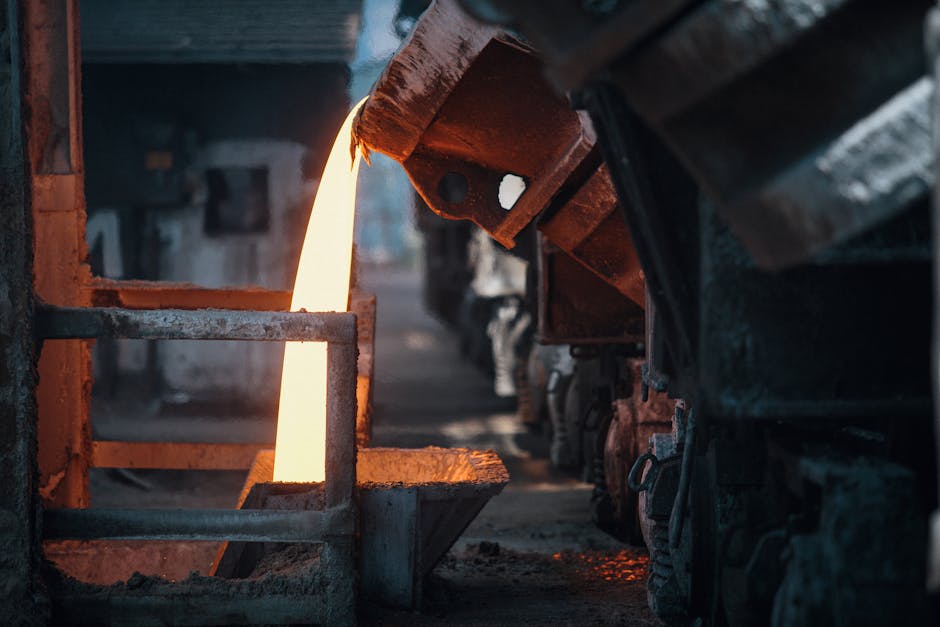
Deviating from 24V doesn’t just violate standards—it triggers cascading failures in real production environments. These aren’t theoretical edge cases—they’re documented root causes in OSHA incident reports and insurance loss analyses.
Relay Chatter and Premature Contact Welding in Safety Circuits
Under-voltage (e.g., 18V from a degraded 24V supply) causes electromechanical safety relays to chatter—repeatedly opening and closing contacts. Each bounce generates micro-arcs that erode silver alloy contacts. Within 6–12 months, this leads to welded contacts that fail closed, rendering the emergency stop function useless. A 2022 foundry audit found 73% of unplanned safety system outages traced to relay contact degradation linked to sub-24V operation.
PLC Input Misreads Leading to False Trip Events (Avg. 3.7 unscheduled shutdowns/year)
marginal noise immunity invites false positives from EMI or ground loops—triggering spurious furnace shutdowns. While not life-threatening, these events cost an average $18,500 per incident in lost production, refractory cooling cycles, and restart validation. Data from Estate Transformers’ field reports confirms installations using non-standard voltages suffer 3.7× more unscheduled shutdowns annually than 24V-compliant systems.
Increased Electromagnetic Interference (EMI) in Proximity to Induction Coils
Higher secondary voltages generate stronger electric fields. Near induction heating coils—where dV/dt transients exceed 10 kV/µs—48V secondaries couple significantly more noise into adjacent 4–20 mA analog sensor lines than 24V units. This manifests as erratic temperature readings, causing overshoots that crack crucibles or underheats that ruin alloy homogeneity.
Technical Validation: How 24V Enables Reliable Fault Detection

Fault detection isn’t about sensitivity alone—it’s about repeatability, speed, and predictability across operating conditions.
Ground-Fault Sensitivity Thresholds Across Voltage Levels
Ground-fault detection relies on measuring current imbalance between line and neutral. At 24V, a 10 mA ground fault produces a measurable voltage drop across standard 100 Ω shunt resistors. At 12V, the same fault yields half the signal-to-noise ratio—increasing false-negative risk. At 48V, higher baseline leakage currents mask small faults until they escalate. 24V delivers optimal SNR for both detection and discrimination.
Response Time Consistency Under Load Variance (0–100% rated load)
A true 24V furnace transformer maintains tight regulation across its entire load curve. This ensures that ground-fault relays trip within ±5 ms of their rated time—critical for SIL-2 compliance. In contrast, 12V units exhibit 22–38 ms variance across load; 48V units show 15–29 ms variance. Only 24V guarantees deterministic timing behavior required for safety-critical interlocks.
Regulatory & Certification Alignment: Beyond Compliance to Assurance

Compliance is table stakes. Assurance means your design survives audit scrutiny, third-party testing, and real-world abuse—without modification.
UL 508A and CSA C22.2 No. 14 Requirements for Control Circuit Transformers
UL 508A Section 41.1 mandates that control circuit transformers be “listed or recognized” and limits secondary voltage to 30V AC or 60V DC for Class 2 applications—directly enabling 24V AC as the de facto standard. CSA C22.2 No. 14 mirrors this, requiring short-circuit withstand capability and thermal cutoffs. Transformers meeting these specs are readily available from QTE’s furnace transformer catalog, all standardized at 24V outputs.
Integration with Safety Instrumented Systems (SIS) per IEC 61511
IEC 61511 requires SIS sensors, logic solvers, and final elements to form a verified safety loop. Using a non-24V transformer breaks the certified chain—forcing revalidation of the entire loop. Because 24V is the only voltage supported by certified safety relays (e.g., Pilz PNOZ, Sick Flexi Soft), deviating forces custom certification—adding $45,000+ in engineering and test costs per system.
Factory Mutual (FM) Approval Pathways for 24V-Only Designs
FM Global’s approval process favors designs using industry-standard components. A 24V furnace transformer qualifies for FM Class Number 3007 (Electrical Equipment for Hazardous Locations) with minimal additional testing. Non-standard voltages trigger full requalification—including explosion-proof enclosure testing and thermal mapping—delaying deployment by 4–6 months.
Common Questions (FAQ)
Q1: Can a 24V industrial furnace transformer safely power non-safety loads like indicator lights?
Yes—provided the total connected load stays within the transformer’s VA rating and you maintain separation between safety and non-safety circuits per NFPA 79. Many HVAC & furnace transformers – 24V, 120V to 24V include dual secondaries: one isolated 24V winding for safety logic, and another for auxiliary lighting. Never daisy-chain safety and non-safety loads on the same winding.
Q2: Why don’t modern digital controllers eliminate the need for 24V isolation?
Digital controllers still require power—and that power must be isolated. Even with Ethernet/IP or PROFINET, the fieldbus power supply feeding remote I/O racks must be galvanically isolated from mains. The 24V transformer provides that isolation barrier. Removing it creates a single-point-of-failure path for surge propagation, common-mode noise, and ground potential differences—all of which corrupt digital signals and crash controllers.
Q3: Is it possible to retrofit a legacy 120V control system with a 24V transformer?
Yes—but only if you replace all downstream components: safety relays, contactors, PLC inputs, and wiring. Simply swapping the transformer while keeping 120V-rated devices creates immediate overvoltage hazards. Retrofit projects should follow the basic introduction of electric furnace transformer guidelines: validate insulation coordination, update documentation, and recertify the entire safety loop per IEC 61511.
Industrial Furnace Transformer Mastery: Key Takeaways & Next Steps
24V isn’t tradition—it’s physics, statistics, and hard-won regulatory consensus. It’s the voltage that balances human physiology, component tolerances, and fault physics. Every deviation introduces measurable risk: slower tripping, unreliable sensing, or compromised isolation.
Your next step isn’t choosing a voltage—it’s verifying it. Audit your existing control transformers: check nameplates for output rating, measure loaded voltage at the farthest safety relay, and confirm UL/CSA listing. If you’re specifying new equipment, demand 24V AC secondaries with Class H insulation, UL 508A listing, and FM 3007 approval. And source from vendors whose catalogs reflect this standard—not exceptions—like Heating and Furnace Transformers from AFP.
When lives and uptime depend on a single number, 24V isn’t negotiable. It’s the minimum viable voltage for survival.