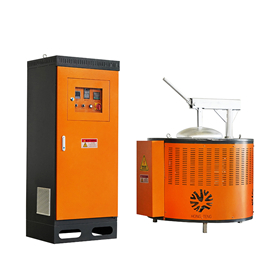
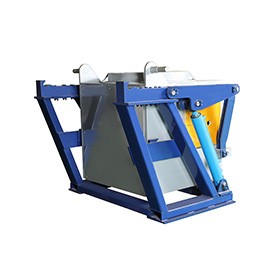
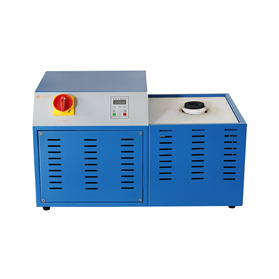
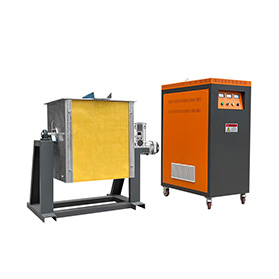
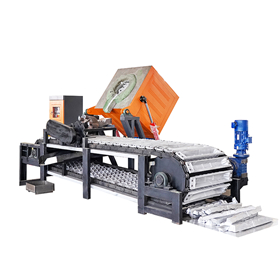
Luoyang HongtengIntermediate frequency induction furnace
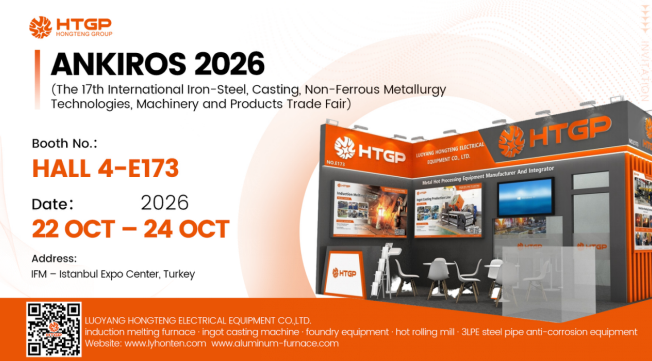
Luoyang Hongteng Electrical Equipment Co., Ltd. (HTGP) HTGP will participate in two major international exhibitions this October — FABEX Saudi Arabia 2026 in Riyadh and ANKIROS 2026 in Istanbul, Türkiye. We look forward to meeting customers and industry professionals, presenting selected equipment and components, sharing technical information and discussing project requirements face to face. FABEX Saudi Arabia 2026 Date: October 11–14, 2026 Venue: Riyadh International Convention & Exhibition Center, Saudi Arabia Booth: Hall 1 – A48 At FABEX Saudi Arabia 2026, visitors can meet our professional team, view selected HTGP equipment and components, review product catalogs and technical information, and watch real project videos. Our team will also be available for one-to-one discussions about equipment selection and specific project requirements. ANKIROS 2026 Date: October 22–24, 2026 Venue: IFM – Istanbul Expo Center, Türkiye Booth: Hall 4 – E173 At ANKIROS 2026, visitors can explore selected HTGP equipment and components, review technical specifications and product information, and communicate directly with our professional team. We welcome you to bring your project requirements and discuss suitable equipment solutions with us. HTGP at International Exhibitions HTGP regularly participates in international exhibitions to meet customers, exchange industry insights and communicate our metal hot processing...
Vacuum Induction Furnace Architecture: Shell Engineering, Coaxial Power Feeds, and Vacuum Systems Vacuum induction melting (VIM) furnaces require precise integration of robust mechanical structures and complex electrical networks. Every aspect of the furnace body—from the structural steel shell to the vacuum-sealed dynamic electrodes—must handle massive pressure differentials and intense electromagnetic fields while maintaining a clean, airtight refining environment. 1. Furnace Shell Design & Structural Engineering The furnace body and its auxiliary assemblies comprise the core structural environment needed for charging, ramming, melting, and casting. Atmospheric Pressure Requirements Because the entire metallurgical process occurs inside the sealed chamber, the furnace shell must withstand immense compressive forces created by the deep internal vacuum. Ensuring high structural strength is a primary engineering priority. Shell Wall Configurations Industrial design variations balance thermal management with furnace capacity: Small-Scale Furnaces: These systems utilize a full double-walled structure across the entire vessel. The outer layer is welded from standard carbon steel plate, while the inner layer uses non-magnetic austenitic stainless steel to prevent stray induction heating. High-velocity cooling water flows continuously between these layers. Large-Scale Furnaces: To optimize manufacturing costs and structural efficiency, large installations use a single-walled steel plate layout as the baseline. Double-walled cooling jackets...
Aluminum Tapping Operations: Thermodynamics, Logistics, and Field Safety In electrolytic reduction facilities, aluminum tapping is a highly regulated metallurgical procedure. Beyond basic siphoning, executing a tap requires a strict understanding of thermodynamics, mathematical plant logistics, and rigid dynamic field protocols to maximize product purity and maintain zero-accident metrics. 1. The Thermodynamic Necessity of Ladle Preheating Q49: Why must an aluminum tapping ladle be thoroughly preheated before extraction? A: If an empty tapping ladle remains exposed to the atmosphere for an extended period, its internal refractory lining absorbs ambient moisture. Introducing superheated molten aluminum directly into a cold, un-preheated ladle triggers severe thermodynamic reactions: Explosive Flash Moisture Expansion: The sudden contact with high-temperature liquid metal causes the trapped moisture within the lining to instantaneously flash into steam. This rapid volumetric expansion can cause violent molten metal splashing or catastrophic steam explosions, threatening field personnel and equipment. Chemical Contamination ($Al_2O_3$ and Hydrogen Enrichment): At elevated temperatures, the liquid aluminum reacts chemically with the trapped moisture ($\text{H}_2\text{O}$), generating hydrogen gas ($\text{H}_2$) and aluminum oxide ($\text{Al}_2\text{O}_3$). The hydrogen is rapidly absorbed into the liquid matrix, while the oxides form dense inclusions. This de-refines the aluminum, reducing its final chemical purity and complicating downstream holding...
Radiation Heat Exchangers When a small flame or high-temperature exhaust stream flows along the center of a large conduit, the pipe walls receive only a limited amount of radiant heat per unit area. By applying this specific thermodynamic principle, engineers can design and manufacture highly robust and durable metal radiation heat exchangers (recuperators) for industrial applications. 1. Core Design and Structural Mechanics The Basic Radiation Recuperator Configuration The simplest form of an early-stage radiation heat exchanger used for forging furnaces consists of concentric cylinders: Exhaust Flow: Waste flue gas enters the recuperator via an opening located on the furnace roof. The diameter of this opening is typically smaller than the diameter of the heat exchanger’s outer shell. Gas Mixing & Passage: Inside the inner shell, the hot gas column gradually mixes with the surrounding cooler gases. Concurrently, air passes at high velocity through the narrow annular channel configured between the inner and outer shells. Insulation: The outer shell of the heat exchanger is completely insulated to minimize ambient thermal losses. Managing Differential Thermal Expansion If the diameter of the roof opening is larger than the furnace top opening, and the air passage remains narrow, the differential thermal expansion between the...
Aluminum processing 1. Is all the aluminum used in human society primary aluminum? Answer: Not all metallic aluminum widely used in human society is primary aluminum. Current sources consist of primary aluminum production and recycled aluminum production. Recycled aluminum is produced by smelting recovered waste aluminum products. However, primary aluminum production still accounts for the major portion of total aluminum output. With industrial development and the increase in aluminum production and products, the volume of recycled aluminum production will also grow. In industrially developed countries, recycled aluminum production accounts for approximately 1/3 of total aluminum output. 2. What is the role of aluminum in the national economy and daily life? Answer: Since the adoption of the molten salt electrolysis method for producing metallic aluminum, aluminum and its alloys have been extremely widely applied. Due to its excellent chemical properties and superior physical performance, aluminum is extensively used in various industrial fields, including aerospace, power and electrical engineering, automotive and transportation, instrumentation, chemical industry, food industry, construction, and even in people’s daily lives. The output of aluminum ranks first in the non-ferrous metal industry and is second only to steel in the entire metallurgical industry. Since 2001, China has become the...
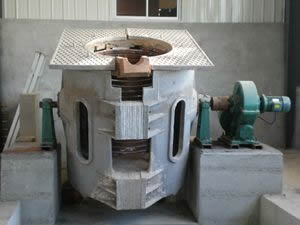
The Structural Design and Tilting Mechanisms of Medium Frequency Induction Furnaces 1. Overview of the Induction Furnace Body Structure The structural form of the Medium Frequency (MF) induction furnace body is essentially the same as that of the Power Frequency (PF) induction furnace. The furnace body section is comprised of the following core components: Furnace Frame: The primary supporting structure. Furnace Body: Available in two types—Frame Type and Shell Type. Furnace Lid: For thermal retention and safety. Tilting Mechanism: For pouring molten metal. Cooling Water System: To manage the thermal load on the inductor. Power Supply System: The electrical input interface. Industrial examples include the 150kg MF induction furnace and the 500kg MF induction furnace, both commonly equipped with hydraulic tilting devices for precision pouring. 2. Structural Differences: Medium Frequency (MF) vs. Power Frequency (PF) The primary structural difference between MF and PF induction furnaces lies in the relative position of the crucible to the inductor and the cross-sectional dimensions of the inductor. Relative Position of Liquid Metal and Inductor In a Medium Frequency induction furnace, the liquid metal is usually completely surrounded by the inductor, with the metal level remaining lower than the top of the inductor. In contrast,...
Induction Steel Melting Furnace
Aluminum Induction Melting Furnace
Stainless Steel Induction Melting Furnace
Medium Frequency Gold Induction Melting Furnace
Small Medium Frequency Induction Furnace
Aluminum/Copper Ingot Continuous Casting Line
Please fill out the form below (required *), send us a short message, and we will contact you as soon as possible.
Send Message
Copyright © 2026 Luoyang Hongteng Electrical Equipment Co., Ltd.