Luoyang HongtengIntermediate frequency induction furnace
Industrial Furnace Manufacturers: Why the Right Partner Matters More Than the Furnace Itself If you search for industrial furnace manufacturers, you’ll find hundreds of suppliers claiming advanced technology, competitive pricing, and fast delivery. On paper, many furnaces look similar. Capacities overlap. Temperature ranges are comparable. Control systems use the same buzzwords. Yet in real factories, results vary dramatically. Some plants achieve stable output, predictable energy costs, and fast ROI. Others struggle with downtime, inconsistent quality, rising electricity or gas bills, and slow after-sales support—especially overseas. The difference rarely comes down to the furnace alone.It comes down to who built it, how it was engineered, and what kind of long-term partner stands behind it. As an industrial furnace manufacturer with deep experience in metal heat processing, we’ve learned this lesson not from brochures—but from factories that run 24/7, under real production pressure. 1.Industrial Furnaces Are Not “Equipment Purchases” — They Are Long-Term Production Systems For factory owners and smelting plant directors, the core question is never: “Is this furnace cheap?” The real questions are: How many productive hours per year will this furnace deliver? How stable is output under fluctuating raw materials? How predictable are energy and maintenance costs? What happens...
Why the Right Partner Matters More Than the Furnace Itself If you are searching for an industrial furnace company, chances are you are not casually browsing.You are likely facing a high-stakes decision—one that will affect your production stability, energy costs, delivery commitments, and return on investment for the next 10 to 20 years. From my experience working with metal processing plants, foundries, and steel producers across multiple regions, I can say this with confidence: Choosing an industrial furnace company is not about buying equipment.It is about choosing a long-term production partner. In an industry where a single unplanned shutdown can cost hundreds of thousands of dollars, the furnace itself is only one part of the equation. The company behind it—its engineering depth, manufacturing discipline, service capability, and overseas support—often determines whether the investment succeeds or quietly becomes a bottleneck. This article will help you understand what truly separates a reliable industrial furnace company from a transactional equipment supplier, and why that difference directly impacts total cost of ownership (TCO), uptime, and long-term profitability. 1.Beyond Equipment: What an Industrial Furnace Really Represents On paper, most industrial furnaces look similar.They list power ratings, temperature ranges, refractory thickness, burner efficiency, or induction frequency....
Steam Blast Furnace & Modern Industrialization How Steam-Integrated Blast Furnaces Are Reshaping Cost, Efficiency, and Long-Term ROI In today’s steel and ironmaking industry, the question is no longer whether blast furnaces need to modernize —the real question is how far, how fast, and with what level of risk control. Rising energy prices, tighter environmental regulations, labor shortages, and pressure on margins have all pushed traditional blast furnace operations to their limits. Many plants are still running, but they are running too expensively, too rigidly, and too close to failure margins. This is where steam blast furnace modern industrialization enters the conversation — not as a buzzword, but as a practical evolution path for plants that care about long-term survival and profitability. Why Traditional Blast Furnace Models Are Under Pressure Blast furnaces have powered industrialization for more than a century. They are robust, proven, and capable of massive output.But traditional configurations come with structural disadvantages that modern plants can no longer ignore: High coke consumption Limited control over internal thermal balance Significant energy losses in off-gas and waste heat Long recovery times after shutdowns or disturbances From a plant owner’s perspective, these issues show up as: Unstable operating costs Higher-than-expected fuel...
1.What Is Smelting? A Practical, Cost-Driven Guide for Foundry Owners and Smelting Plant Managers If you ask ten people “what is smelting,” you’ll likely hear ten technical definitions: ore reduction, high-temperature processing, separation of metal from impurities. All of that is correct—but it’s also incomplete. For factory owners, foundry directors, and technical managers, smelting is not an abstract metallurgical concept. Smelting is a daily operational reality that directly determines: Production capacity Energy consumption Equipment uptime Metal quality and yield Safety and compliance Return on investment (ROI) In other words, smelting is not just about melting metal—it’s about how efficiently, reliably, and predictably a factory turns raw material into sellable output. This article explains what smelting really means from a production, cost, and long-term performance perspective, and why choosing the right smelting equipment partner matters far more than chasing the lowest purchase price. 2.What Is Smelting in Real Industrial Terms? At its core, smelting is the process of extracting and refining metal by applying heat and controlled chemical reactions. It involves: High-temperature furnaces Energy-intensive operations Continuous thermal cycling Precise control of chemistry and time But in an industrial environment, smelting is better understood as a system, not a single machine. A...
Industrial Furnaces-A Strategic Asset for Long-Term Production Stability and ROI 1. Industrial Furnaces Are No Longer Just Equipment — They Are a Business Decision For many years, industrial furnaces were treated as a simple capital purchase. Buyers compared chamber size, maximum temperature, and nameplate power, then negotiated the lowest possible price. That mindset no longer works. Today, industrial furnaces sit at the center of production efficiency, energy consumption, product quality, safety compliance, and long-term profitability. Whether you operate a steel plant, aluminum foundry, or metal processing facility, the furnace you choose directly affects: Annual production output Energy cost per ton Downtime risk and maintenance burden Workforce safety and environmental compliance Capital recovery period and total cost of ownership This article is written for decision-makers who understand that industrial furnaces are strategic infrastructure, not consumable equipment. If your priority is only the lowest purchase price, this page is not for you.If your priority is stable output, predictable ROI, and long-term operational control, read on. 2. Why “Selling Parameters” Is Failing Modern Furnace Buyers Many furnace suppliers still rely on parameter-driven selling: Maximum temperature Rated power Furnace dimensions Nominal melting capacity These numbers look impressive on paper, but experienced plant...
Why “Industrial Furnace News” Is No Longer Just Industry Information If you are running a steel plant, foundry, or non-ferrous metal operation today, “industrial furnace news” is no longer something you skim occasionally. It has become a strategic input into your investment decisions, operating cost structure, and long-term competitiveness. Energy prices remain volatile. Environmental regulations are tightening across Europe, the Middle East, Southeast Asia, and Latin America. At the same time, customers demand higher metal purity, tighter delivery schedules, and stable pricing. In this environment, furnace performance is no longer a technical detail — it is a financial variable. What we see in recent industrial furnace news is not just new models or upgraded components. It reflects a deeper shift: furnaces are evolving from standalone machines into core production systems that determine uptime, energy efficiency, compliance, and ROI. This article is not written for procurement teams chasing the lowest initial price. It is written for decision-makers who carry responsibility for output stability, long-term cost control, and operational risk. Global Industrial Furnace Trends That Actually Matter to Plant Owners 1. Downtime Has Become the Most Expensive Hidden Cost One consistent theme across global industrial furnace news is the renewed focus on...
Induction Steel Melting Furnace
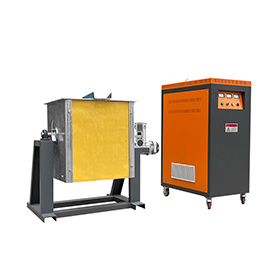
Aluminum Induction Melting Furnace
Stainless Steel Induction Melting Furnace
Medium Frequency Gold Induction Melting Furnace
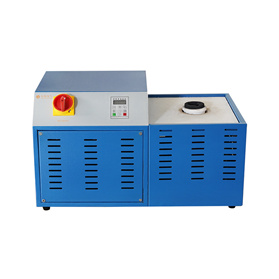
Small Medium Frequency Induction Furnace
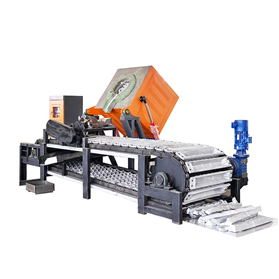
Aluminum/Copper Ingot Continuous Casting Line
Please fill out the form below (required *), send us a short message, and we will contact you as soon as possible.
Send Message
Copyright © 2026 Luoyang Hongteng Electrical Equipment Co., Ltd.